PHASES OF EMERGENCY MANAGEMENT [M]
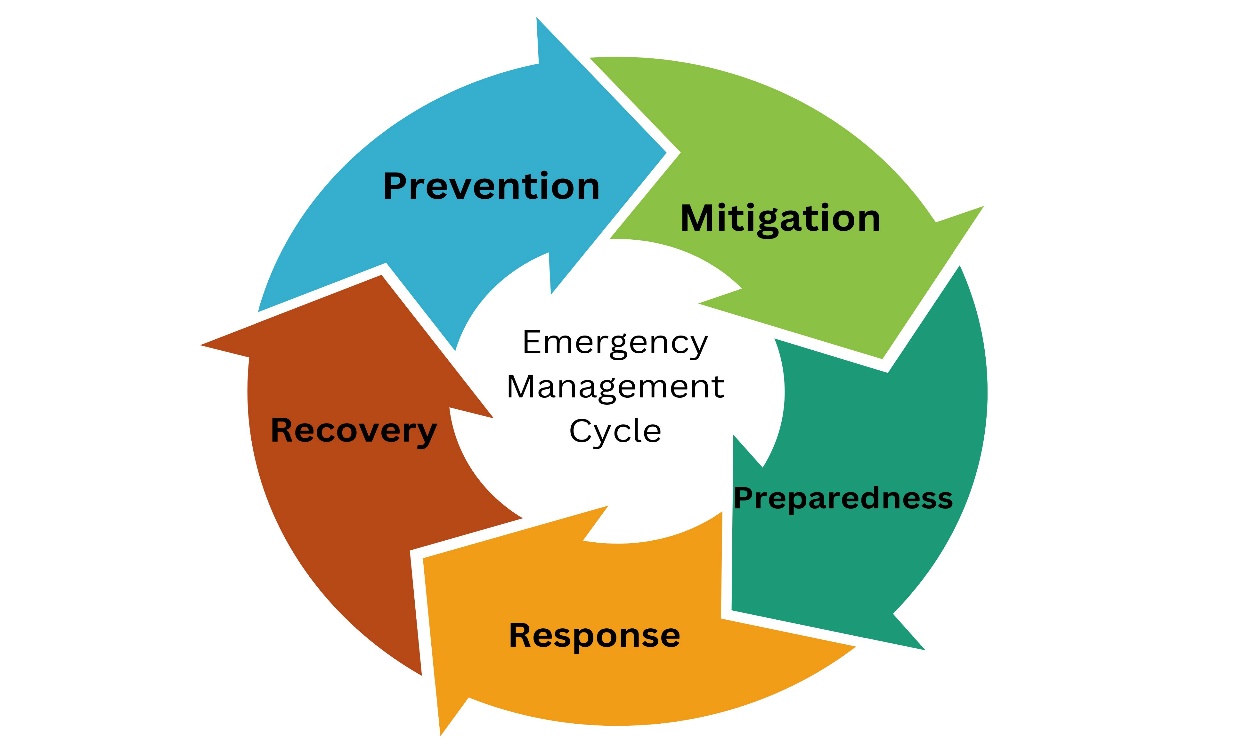
The Blinn College District will employ the five phases of emergency management (Emergency Management Cycle), as defined by the Texas School Safety Center (TxSSC), in emergency and critical incident operations:
Prevention (A) Actions that include activities to avoid an emergency incident or to intervene to stop an emergency incident from occurring. Prevention involves activities to protect lives and property.
Mitigation (B) Actions that include activities to reduce the loss of life and property from natural, technological, and human-caused hazards by avoiding or lessening the impact of an emergency incident and providing value to the public by creating safer communities.
Preparedness (C) Actions that include a continuous cycle of planning, organization, training, equipping, exercising, evaluation, and taking corrective action to ensure effective coordination during emergency incident response.
Response (D) Actions that include activities to address the short-term, direct effects of an emergency incident. Response includes immediate actions to save lives, protect property, and meet basic human needs. The response actions include execution of the Multi-Hazard Emergency Operations Plans (see functional and hazard-specific annexes).
Recovery (E) Actions that include activities to address both short-term and long-term efforts for rebuilding and revitalization of affected communities.
* S ee CONCEPT OF OPERATIONS UNDER ICS FRAMEWORK section for required actions for each phase of Emergency Management.