2025 Annual Security and Fire Safety Report

Annual Security and Fire Safety Report
Blinn College District Police Department
- Address
- 902 College Avenue, Brenham, TX 77833
- Administrative Number
- 979-830-4755
- Emergency Number
- 911
- Non-Emergency Number
- 979-277-7373
- Fax
- 979-830-4655
- Website
- Police & Emergency Management
- Chief of Police
- John Chancellor
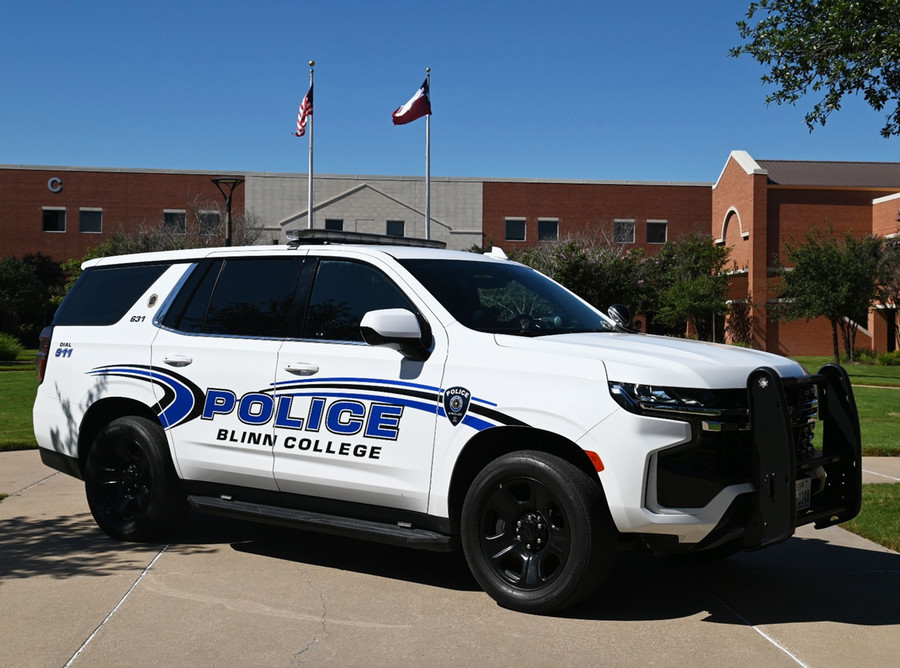
For Campus Emergencies
- Police/Fire/EMS
- 911
- Blinn College Police Department [Bryan Campus]
- 979-209-7600
- Blinn College Police Department [Brenham Campus]
- 979-277-7373
- Blinn College Police Department [Brenham Campus Administrative Asst.]
- 979-830-4755
- Bryan Police Department (Non-Emergency)
- 979-361-3888
- Brenham Police Department
- 979-277-7373
- Brenham Fire Department
- 979-337-7300
- Washington County Sheriff’s Office
- 979-277-6251
- Schulenburg Police Department
- 979-743-2677
- Sealy Police Department
- 979-885-2913
Helpful Numbers
- Brenham Campus Main Number
- 979-830-4800
- Bryan Campus
- 979-830-4800
- Federal Bureau of Investigation (FBI)
- 979-731-0600
- Human Resources
- 979-209-7572
- Texas Department of Public Safety (DPS)
- 979-776-3100
- Title IX Coordinator
- 979-830-4216
- Admissions
- 979-830-4800
- Advising
- Advising Hours
- Business Office
- 979-830-4800
- Enrollment Services
- 979-830-4800
- Financial Aid
- Financial Aid Personnel
- Help Desk
- 979-830-4357
- Student Services (Brenham)
- 979-830-4800
- Student Services (Bryan)
- 979-830-4800
LOCAL HEALTHCARE FACILITIES
Back to topBrenham
Brenham Campus Health Clinic
Baylor Scott & White Health Clinic
904 Green Street
Brenham, TX 77833
979-830-4045
Baylor Scott & White Medical Center Brenham 700 Medical Parkway
Brenham, TX 77833
979-337-5000
MidCoast Medical Center
44 N. Cummings St.
Bellville, TX 77418
979-413-7400
Integrity Urgent Care
2608 Highway 36 South
Brenham, Texas 77833
979-451-6000
CHI St. Joseph Health Primary Care Brenham
110 Highway 290 West
Brenham, Texas 77833
979-830-5584
Bryan/College Station
Blinn-Bryan Campus Health Clinic
Baylor Scott & White Clinic
2423 Blinn Blvd.
Building D, Room 150
979-209-7269
RELLIS Campus Health Clinic
Baylor Scott & White Health Clinic
Schwartz Building, Room 230G
Bryan, TX 77807
979-691-2409
CHI St. Joseph Health Regional Hospital 2801 Franciscan Dr.
Bryan, TX 77802
979-776-3777
Baylor Scott & White Medical Center – College Station 700 Scott and White Dr.
College Station, TX 77845
979-207-0100
CHI St. Joseph Health College Station Hospital 1604 Rock Prairie
College Station, TX 77845
979-764-5100
CHI St. Joseph Health Express Care 2010 E. Villa Maria Rd.
Bryan, TX 77807
979-731-5200
Baylor Scott & White Clinic
1296 Arrington Rd. Ste 100
College Station, TX 77845 979-207-3636
Baylor Scott & White Convenient Care Clinic
1700 University Dr. East
Entrance 12
College Station, TX 77840
979-691-3149
Integrity Urgent Care
3201 University Dr. East, Suite 135
Bryan, TX 77802
979-703-1832
SignatureCare Emergency Center College Station 1512 Texas Avenue South, Suite 500
College Station, TX 77840 979-213-5728
St. Joseph Express
4421 Texas 6 Frontage Rd #B, College Station, TX 77845
979-731-5200
Schulenburg
Columbus Community Hospital 110 Shult Drive
Columbus, TX 78934
979-732-2371
Kocurek and James Clinic 40 East Ave.
Schulenburg, TX 78956
979-743-3520
Columbus Medical Clinic 2122 State Hwy 71
Columbus, TX 78934
979-732-2318
Youens and Duchicela Clinic
402 Youens Drive
Weimar, TX 78962
979-725-8545
Sealy
Sealy Urgent Care Center
1036 Circle Dr.
Sealy, TX 77474
979-627-6224
Medical Clinics of Sealy
1036 N. Circle Dr.
Sealy, TX 77474
979-877-0022
AccessHealth Brookshire Clinic 533 FM 359 South
Brookshire, TX 77423
281-822-4235 or 281-342-4530
MESSAGE FROM THE CHIEF OF POLICE
Back to topTo the Blinn College District Community,
Thank you for your interest in the 2025 Blinn College District Annual Security and Fire Safety Report. The College District publishes this report to comply with the Jeanne Clery Act and to disclose crime statistics and campus safety information to the College District community. The Blinn College District Police Department collaborates with entities within the College District’s service area and our public safety partners to provide a safe environment for our students, faculty, staff, and campus visitors.
The Blinn College District Police Department’s mission is to provide the utmost in safety and security to everyone in the College District community. Our primary goal is to provide a safe learning environment for all who come to Blinn College District. Our core values of integrity, respect, and support are the guiding principles for College District Police personnel as we strive to maintain a safe and secure environment for all to enjoy.
We welcome your comments and hope that this report helps to foster a safe, caring campus environment.
John Chancellor
Chief of Police
Non-Discrimination Policy
Blinn College District does not discriminate on the basis of race, color, national origin, sex, or disability in its programs or activities. For information regarding Title IX, ADA, Section 504 and other anti-discrimination coordinators, see the Required Notices link on the College District’s main webpage.
Annual Security Report
Back to topPREPARATION OF THE ANNUAL SECURITY REPORT AND DISCLOSURE OF CRIME STATISTICS
The Blinn College District Police Department publishes this report to inform the Blinn College District community about campus security policies, initiatives to prevent and respond to crime and emergencies, and the occurrence of crime on campus. This report complies with the Jeanne Clery Disclosure of Campus Security Policy and Campus Crime Statistics Act (Clery Act) and uses information maintained by the District Police Department, as well as information provided by other College District departments and local law enforcement agencies. These agencies include the Texas Department of Public Safety, Bryan Police Department, College Station Police Department, Texas A&M Police Department, Brazos County Sheriff’s Department, Brenham Police Department, Washington County Sheriff’s Department, Schulenburg Police Department, Fayette County Sheriff’s Department, Sealy Police Department, and Austin County Sheriff’s Department. Each of these entities provides updated policy information and/or crime data.
This report provides statistics for the previous three years concerning reported crimes that occurred on campus, in certain off-campus buildings, and on property owned, leased, or controlled by the College District. This report also includes institutional policies concerning campus security, such as policies regarding sexual assault, alcohol, and other drugs.
The College District maintains a digital copy of this report at the District Police Department website, and distributes a notice of the availability of this Annual Security Report by October 1 of each year to every member of the College District community. Anyone, including prospective students and employees, may obtain a paper copy of this report by contacting the District Police Department at 979-830-4755.
The District Police Department is in charge of Emergency Management for the College District. We conduct drills and exercises to test the College District’s emergency operations plans and continuity of operations plans.
CLERY GEOGRAPHY DEFINITIONS
ON-CAMPUS BUILDINGS OR PROPERTY
Under the Clery Act, the definition of “campus” geography (also known as “on-campus”) encompasses the following:
any building or property owned or controlled by an institution within the same reasonably contiguous geographic area and used by the institution in direct support of, or in a manner related to, the institution’s educational purposes, including residence halls; and
any building or property that is within or reasonably contiguous to paragraph (1) of this definition, that is owned by the institution but controlled by another person, is frequently used by students, and supports institutional purposes (such as a food or other retail vendor).
These College District locations meet the definition of “On-Campus” under the Clery Act:
Acronym |
Campus Name |
|---|---|
BN |
Brenham Campus |
BR |
Bryan Campus |
SB |
Schulenburg Campus |
SY |
Sealy Campus |
PO |
Post Office Campus |
HC |
A.W. Hodde, Jr., Technical Education Center |
RELLIS |
RELLIS Campus |
PUBLIC PROPERTY
Under the Clery Act, “public property” encompasses the following:
All public property, including thoroughfares, streets, sidewalks, and parking facilities, that is within the campus, or immediately adjacent to and accessible from the campus.
NON-CAMPUS BUILDINGS OR PROPERTY
Under the Clery Act, non-campus buildings or property are defined as:
Any building or property owned or controlled by an institution that is used in direct support of, or in relation to, the institution’s educational purposes, is frequently used by students, and is not within the same reasonably contiguous geographic area of the institution. These are locations associated with College District campuses (as defined by the Clery Act).
COLLEGE DISTRICT GEOGRAPHY
On-Campus
Main Campus located at 902 College Ave, Brenham, TX 77833
Old Main
Administration Building
Marie Heineke Memorial Gymnasium
Henry J. Boehm Industrial Arts Building
Weight Room
C.F. Schmidt Building
Classroom Building
Hodde Technical Center
Physical Education Building
W. L. Moody Jr. Library
Small Business Development Center
Arts & Science Building
Blinn College Foundation – Whigham House
Bob Bullock Building
Field House
Leroy Dreyer Baseball Field
Science, Technology, Engineering, and Innovation Building
J. Hal and Allyne Machat Music Facility
Academic Building
Dr. W.W. O’Donnell Performing Arts Center
W.J. “Bill” Rankin Agricultural Complex
Maintenance and Vehicle Storage
Intramural Field
Residence Life:
Beazley Hall
Hallstein Hall
Helman Hall
Melcher Hall
Mill Creek Hall
Prairie Lea
Wheeler Hall
Blinn College Park Apartments [Bldgs. 1 – 7]
The Student Center/Dining Hall/Bookstore/Student Center Conference Room
Health Clinic – Lot C
Visitor Parking Lots
Lot E [lot in front of Administration Bldg.]
Lot K [Blinn Blvd]
Lot I [lot in front of Student Center]
Lot V [Bill Rankin Ag Complex]
Lot X [lot in front of the Kruse Center]
Residence Parking Lots
Blinn College Park Apartments (BCPA) PARKING LOTS
Lot 1A [on Saeger St. for Bldg. 1, 2, and 3]
Lot 4A [on Saeger St. for Bldg. 4]
Lot 5A [on Saeger St. for Bldg. 5]
Lot 6A [on Saeger St. for Bldg. 6]
Lot 7A [on Saeger St, for Bldg. 7]
Residence Parking Lots
Lot H [on Second St. for Melcher Hall, Helman Hall and Hallstein Hall]
Lot B [on Fifth St. behind the football stadium]
Lot Y [on Old Mill Creek for Mill Creek Hall]
Lot Z1 [on Fifth for Prairie Lea]
Lot Z2 [on Fifth for Prairie Lea]
Lot N [on Prairie Lee St. for Helman, Hallstein, and Melcher Halls]
Lot O [on High St. for Helman, Hallstein and Melcher Halls]
Lot R [on Green St. lot between Beazley Hall and Wheeler Hall]
Lot S [on Second St. for Wheeler Hall]
Commuter Parking Lots
Lot B [on Fifth St. behind the football stadium]
Lot I [on Schwartz’s Way ST. in front of the Student Center]
Lot K [on Blinn Blvd. and College Ave.]
Lot T [on Second St. and High St. across the street from Wheeler Hall]
Lot V [on Old Mill Creek Rd. at the Ag Complex]
Lot W [on Willow Grove Drive]
Lot X2 [at the Kruse Center]
Faculty & Staff Lots
Lot A [on Fifth Street]
Lot C [on Green St. across from Old Main in the Health Clinic Lot]
Lot D [on Green Street]
Lot F [on Third St. behind the Administration Bldg.]
Lot G [on Schwartz Way east of the Student Center Bldg.]
Lot G1 [on Prairie Lea Street]
Lot K [on Blinn Blvd]
Lot L [on Blinn Blvd. behind the O’Donnell Bldg. and in front of the Physical Plant]
Lot M [on Blinn Blvd. on the side of the Bullock Bldg.]
Lot N [on Prairie Lee St. behind the Classroom/Science Bldg.]
Lot O [on High Street]
Lot V [on Old Mill Creek at the Ag Complex]
Blinn-Bryan Campus located at 2423 Blinn Blvd., Bryan, TX 77802
Building A – Academic Building (Classrooms, Writing Center, Prospective Student Relations)
Building B – Modular Building (Faculty Offices)
Building C – Library Building (Library, Learning Center, Classrooms)
Building D – Science Building (Science Labs, Disability Services, Health Clinic, Classrooms)
Building F – Student Center Building (Student Center, Food Service, Black Box, Classrooms)
Building G – General Building (Copy Center, Science Labs, Language Labs, Classrooms)
Building H – Health Building (Allied Health Labs, Open Computer Lab, Fine Arts, Classrooms)
Building J – Ceramics Lab
Building R – Modular Building (Classrooms, Distance Learning Offices)
Building S – Administrative offices, Bookstore and Police Department
Building T – College Park Center (Classrooms)
Post Office Campus located at 301 Post Office St., Bryan, TX 77801
Administration Building - 2608 E. Villa Maria Rd. Bryan, TX (Admissions, Records, Enrollment Services, Financial Aid, Veteran Services, Testing Center, Academic Advising, Human Resources)
Blinn-Schulenburg Campus located at 100 Ranger Dr., Schulenburg, TX 78956
Building 1
Building 2
Blinn-Sealy Campus located at 3701 Outlet Mall Drive #250, Sealy, TX 77474
Blinn-RELLIS Campus located at 1366 Bryan Road, Bryan, TX 77807
Walter C. Schwartz Building 1366 Bryan Rd, Bryan, TX 77807
RELLIS Administration Building 1300 Bryan Rd. Bryan, TX 77807
Building 8004 1455 4th St, Bryan, TX 77807
Building 7901 3112 Avenue D, Bryan TX 77807
Building 8236 2951 Avenue C, Bryan TX 77807
The College District does not maintain short stay away or study abroad geography for Clery Act purposes.
ABOUT THE BLINN COLLEGE DISTRICT POLICE DEPARTMENT
Back to topThe Blinn College District Police (District Police) Department is responsible for the safety and well-being of all students, faculty, and staff at Blinn College District.
The District Police Department is a State of Texas-certified police agency that employs 36 commissioned officers and several support staff. The District Police Department’s authority extends to each of the counties in which College District campuses reside (Austin, Brazos, Fayette, and Washington counties), and the Department investigates all crimes on campus property. District Police officers are licensed peace officers as defined under the laws of the State of Texas and therefore have authority as peace officers. Texas law vests District Police with all the powers, privileges, and immunities of Texas peace officers within the county, including all streets and roads, and all property that the College District owns, rents, leases, or otherwise controls. The Department’s authority is found within the Texas Code of Criminal Procedure and Chapter 51 of the Texas Education Code. The District Police Department has full arrest authority under the Texas Penal Code.
The District Police Department endeavors to be actively involved in the College District community and invites the College District community to become familiar with the District Police Department and its role at Blinn College District as a community-oriented police agency.
SAFETY: OUR NUMBER ONE PRIORITY
The College District takes extraordinary pride in its campus communities, which provide students and employees with a wonderful place to live, learn, work, and study. While the College District is progressive with its policies, programs, and education, it is up to each member of the College District community to live with a sense of awareness, and to use reasonable judgment when living, working, or visiting on campus.
WORKING RELATIONSHIP WITH LOCAL, STATE, AND FEDERAL LAW ENFORCEMENT AGENCIES
The District Police Department maintains a cooperative relationship with the Texas Department of Public Safety, Bryan Police Department, College Station Police Department, Brazos County Sheriff’s Department, Brenham Police Department, Washington County Sheriff’s Department, Schulenburg Police Department, Fayette County Sheriff’s Department, Sealy Police Department, Austin County Sheriff’s Department, and other surrounding police agencies.
The District Police Department maintains Memoranda of Understanding with the Schulenburg and Sealy police departments and has a dispatch agreement with Brazos County 911 and Washington County 911.
The College District also enjoys positive and cooperative relationships with other local law enforcement agencies, which involves scene security, communications, evidence processing, investigating, and solving crimes.
CRIMES INVOLVING STUDENT ORGANIZATIONS AT OFF-CAMPUS LOCATIONS
The College District relies on its close working relationships with local law enforcement agencies to receive information about incidents involving College District students and recognized student organizations, on and off campus. In coordination with local law enforcement agencies, the District Police Department will actively investigate certain crimes occurring on or near campus. If the department learns of criminal activity involving students or student organizations, it will coordinate with the appropriate law enforcement agency to forward information about the situation to the Office of Resolution Management and Title IX, as appropriate.
REPORTING CRIMES AND OTHER EMERGENCIES
Back to topThe College District maintains multiple ways for campus community members and visitors to report crimes, serious incidents, and other emergencies to law enforcement and to
appropriate College District officials. Regardless of how and where you decide to report these incidents, it is critical for the safety of the entire College District community that you report all incidents immediately and accurately so that the District Police Department can investigate the situation and determine whether follow-up actions are required, including issuing a timely warning or emergency notification.
The College District encourages campus community members to report crimes promptly and to participate in and support crime prevention efforts. The College District also encourages campus community members to report crimes when the victim is unable to make the report. The College District community will be much safer when all community members participate in safety and security initiatives.
The College District asks that you consider filing a voluntary, confidential report if you are the victim of a crime or want to report a crime you are aware of, but do not want to pursue action within the College District or criminal justice system. You may file a report while maintaining confidentiality depending on the crime you are reporting. A confidential report is to comply with your wish to keep your personally identifying information confidential while taking steps to ensure your and others' safety. The confidential reports allow the College District to compile accurate records on the number and types of incidents occurring on campus. The College District counts and discloses reports filed in the Annual Security Report. In limited circumstances, the College District may not be able to assure confidentiality and will inform you in those cases.
REPORTING TO POLICE AND PUBLIC SAFETY
We encourage all members of the College District community to report all crimes and other emergencies to the District Police Department promptly. Law enforcement is available by calling 911 from any location, or by calling:
Blinn-Brenham Campus Police |
979-277-7373 |
|---|---|
Blinn-Bryan Campus Police |
979-277-7373 |
| Blinn-RELLIS Campus Police | 979-277-7373 |
Blinn-Schulenburg Police Department |
979-743-2677 |
Blinn-Sealy Police Department |
979-885-2913 |
Students can also report incidents to the Assistant Vice Chancellor, Student Services at 979-830-4306 or Room 214 of Old Main on the Brenham Campus. Employees may report incidents to the Human Resources Department at 979-209-7546 or 979-209-7655.
CAMPUS CRIME REPORTING DISCLOSURE
The College District keeps a chronological record of each crime reported to the District Police Department daily. This record includes details of each reported crime, such as the date, time, nature, general location, and the disposition of the complainant. These records are made open to the public within two business days of the initial report unless such disclosure
is prohibited by law,
(2) would jeopardize the safety of an individual,
(3) would compromise an ongoing investigation, or
(4) would cause evidence to be destroyed or a suspect to flee.
The District Police Department’s Daily Crime and Fire Log is open to public inspection at the District Police Department offices on the Brenham and Bryan campuses, and at the front offices at the Schulenburg and Sealy campuses. The crime and fire log on each campus contains crime reports for all College District campuses.
The District Police Department utilizes an electronic crime and fire log maintained by the College District’s Academic Technology Department.
REPORTING TO OTHER CAMPUS SECURITY AUTHORITIES
While the College District prefers that community members promptly report all crimes and other emergencies directly to District Police or 911, some campus community members may prefer to report to other individuals or College District staff members. The Clery Act recognizes certain College District officials as “Campus Security Authorities” (CSAs). The act defines these individuals, among other individuals, as:
An institution official with significant responsibility for student and campus housing activities, including student housing, student discipline, and campus judicial proceedings. An official is defined as a person who has the authority and the duty to act or respond to particular issues on behalf of the institution.
The U.S (United States). Department of Education and the Clery Act designate the following individuals as Campus Security Authorities:
Campus Police Departments – All members of the police department.
Individuals with Campus Security Responsibility – Any individuals who have responsibility for campus security but who do not constitute a campus police department or a campus security department, such as an individual who is responsible for monitoring entrances to institutional property. Examples of this category include parking enforcement staff, event security staff, and campus safety patrols (i.e., police cadets, etc.).
Individuals Designated by the Campus – Any individual or organization specified in an institution’s statement of campus security policy as an individual or organization to which students and employees should report criminal offenses. All institutions must publish safety and security-related policy statements. If you direct the campus community to report criminal incidents to anyone or any organization in addition to police or security-related personnel, that individual or organization is a Campus Security Authority.
Officials with Significant Responsibility for Student and Campus Activities – An official of an institution who has significant responsibility for student and campus activities, including, but not limited to, student housing, student discipline, and campus judicial proceedings. Examples include student services, housing and residence life, student disciplinary officials, student judicial programs, officials who oversee student extracurricular activities, directors of athletics, team coaches, faculty advisors, and leaders of recognized student groups. An “official” is defined as any person who has the authority and duty to act or respond to issues on behalf of the institution.
The College District’s Board Policy regarding Campus Security Authorities is CHA(LOCAL), and a copy of the policy is available in the appendix of this Annual Security Report.
The following positions meet the above definition, and the College District has designated each person as a Campus Security Authority for purposes of Clery Act compliance.
The College District requires each of the listed departments to provide an updated list of any additional designated positions within their respective departments, along with the appropriate contact information, to the Office of the Executive Vice Chancellor each year.
Official |
Phone Number |
|---|---|
Director, Athletics |
979-830-4172 |
Dean, Natural and Physical Sciences/ Dean Agriculture and Natural Science |
979-830-4570 |
Dean, Health Sciences |
979-691-2128 |
Dean, Humanities |
979-209-8164 |
Dean, Mathematics, Business, Engineering, and Technology |
979-209-7435 |
Dean, Social Sciences |
979-209-7318 |
Dean, Applied Technology, Workforce and Economic Development |
979-209-7343 |
Dean, Division of Arts, Kinesiology, and Agriculture |
979-830-4241 |
Dean, Distance Learning |
|
Director, Academic Advising and Testing |
979-209-8257 |
Director, Housing |
979-337-6549 |
Health Clinic |
979-830-4045 |
Title IX Coordinator |
979-830-4216 |
Vice Chancellor, Student Services |
979-830-4306 |
Vice Chancellor, Academic Affairs |
979-209-8028 |
Note: As contact persons may change periodically due to changes in employment or duty assignments, please contact the District Police Department Administration at 979-830-4755 if you have questions about current Campus Security Authorities.
SEX OFFENDERS
Sex offenders must register with the District Police Department as required by law or court order. In compliance with state law, the District Police Department maintains a listing of registered sex offenders who are currently enrolled in classes at any College District campus or facility.
A general listing of registered sex offenders is available on the Texas Department of Public Safety web site.
Sex Offender Registration
In 1994, sex offender registration laws were broadly expanded throughout the United States and became known as Megan’s Law, named after a 7-year-old New Jersey girl, Megan Kanka, who was raped and murdered by a known child molester who had moved to a residence across the street from Megan’s family without their knowledge. In the wake of Megan’s murder, states across the nation enacted legislation to govern sex offender registration.
The Texas Sex Offender Registration Program (Chapter 62 of the Code of Criminal Procedure) is a sex offender registration and public notification law designed to protect the public from sex offenders. This law requires adult and juvenile sex offenders to register with the local law enforcement authority of the city in which they reside or, if the offender does not reside in a city, with the local law enforcement authority of the county in which they reside.
Registration involves an offender providing the local law enforcement authority with information that includes, but is not limited to, the offender’s name and address, a color photograph, and the offense for which the offender was convicted and/or adjudicated.
Registered sex offenders are required to periodically report to the local law enforcement authority to verify the accuracy of the registration information and to promptly report certain changes in the information as those changes occur. A sex offender who fails to comply with any registration requirement is subject to felony prosecution.
In October 2000, the Federal Campus Sex Crimes Prevention Act [20 U.S.C. § I092(f)(I)] amended Section 1701.01 of the Violent Crime Control and Law Enforcement Act of 1994. The Campus Sex Crimes Prevention Act requires sex offenders who must register under state law to also provide notice of their enrollment or employment at any institution of higher learning in the state where he/she resides, starting in October 2002. Institutions of higher learning are required to issue a statement in their Annual Security Report detailing where members of the campus community can obtain information concerning registered sex offenders. [20 U.S.C. § 1092(f)(l)].
Procedure
Definition
Faculty/Staff - Employees of the College District, including volunteers who work with students.
Students - Any person enrolled at the College for educational purposes, including full-time and part-time students, and both graduate and undergraduate students.
Responsibilities
Twice per year, in the fall and in the spring semesters, the District Police Department will review the list of current faculty, staff, and students required by State law to register in the Sex Offender Registry. The District Police Department will ascertain the validity of the list and modify it accordingly.
Offenders must complete the CR-35 Institution of Higher Education Sex Offender Notification Form and file it with the agency with which the offender is required to register. The receiving agency will send a notification to the District Police Department. It is the offender’s responsibility to ensure that the College District receives the completed form.
Failure to provide this information can result in criminal sanctions.
The Texas Department of Public Safety field representative of the Sex Offender Registration Program and Crime Records can be reached at:
P.O. Box 4143
Austin, TX 78765-4143
Office – (512) 424-2800
https://publicsite.dps.texas.gov/SexOffenderRegistry
CRIMINAL BACKGROUND CHECKS
The Blinn College District is committed to protecting the security, safety, and health of faculty, staff, students, and others, as well as safeguarding College District assets and resources.
As part of this commitment, the College District identifies all academic programs where criminal background checks are required by law or as a condition of the program approval/accreditation. The College District requires criminal history checks of students in these identified programs and refuses admission to or continuation in these programs, where necessary, to meet such regulations or accreditation standards.
The College District conducts criminal background checks on all applicants prior to acceptance into campus housing and prior to each semester. Should, during a semester, a resident student be charged with a criminal offense which would have precluded them from being eligible for campus housing, they will not be allowed to remain in housing. The student may reapply for housing at a later date, subject to the same housing qualification requirements.
The College District conducts background checks as a condition of employment and supports its commitment to non-discrimination and non-harassment in hiring practices.
CRIME PREVENTION
Back to topThe College District is committed to creating and fostering a safe environment for students, staff, and visitors. The District Police Department is available to offer assistance and advice regarding personal safety. The College District encourages all campus community members to be alert and assertive, take responsibility for their own safety, and, when possible, assist others with their safety needs.
The District Police Department supports a proactive crime prevention effort that works with members of the campus community to create a safe campus environment. Crime prevention and awareness programs begin with freshman orientation. Topics of discussion include the Student Code of Conduct, academic dishonesty, civility, sexual harassment, sexual exploitation, substance abuse, alcohol, and hate violence. Throughout the year, the District Police Department offers detailed presentations and workshops regarding personal safety, office and classroom safety, sexual assault prevention, vehicle and residential security, and response to an active shooter.
The District Police Department’s efforts to educate the campus community about incidents of crime, the importance of reporting crimes (especially sex-related crimes and violent crime), and the prevention of crime are a work-in-progress. Numerous employees of the District Police Department, Student Services, and Housing and Residence Life are active participants in this never-ending effort. Throughout their years at Blinn, students participate in many programs designed to create a safer campus environment. Examples include sexual assault awareness and prevention, alcohol safety awareness, hate crime presentations, office and building security surveys, workplace violence prevention, and anti-theft programs.
EDUCATIONAL SAFETY PROGRAMS
Throughout the year, the College District offers crime prevention and security awareness programs, such as:
Residence Hall Program – Housing and Residence Life, in conjunction with other departments on campus, offer many programs in the residence halls each semester. Program topics include issues such as safety on campus, alcohol use and abuse, healthy relationships, drugs, violence in relationships, and personal management.
“See Something, Say Something” - The Blinn College District promotes situational awareness and reporting of behavioral concerns and physical safety issues via framed posters placed in all facilities and residential halls. Additionally, this initiative is broadcast on District information screens and is available on the District website. These posters provide the opportunity for students, faculty, staff, and visitors to report safety issues utilizing QR codes which take the reportee to easy to complete forms which are routed to the office of Safety and Risk Management for assessment and assignment to the appropriate response group. Reportees receive confirmation that their report has been received and an acknowledgement of their concern.
Operation ID – Personal property protection methods including property marking assistance utilizing an engraver, available through the District Police Department.
Sexual Assault Awareness Program – Crime prevention program designed to make students aware of how to prevent sexual assault. Each semester, the program covers the procedures for how to report a sexual assault and necessary investigative procedures. It also covers preventive measures for other sex-related crimes. The program may involve the District Police Department as well as outside guest speakers who educate students about sexual assault prevention.
Student Services (Counseling Center) – This year-round service is available to assist individuals who are victims of a crime and may be contacted at 979-209-7251 on the Blinn-Bryan Campus, 979-209-8947 on the Blinn-RELLIS Campus, and 979-830-4157 on the Blinn-Brenham Campus. This service is available to students free of charge, and includes confidential counseling provided by professional counselors.
Fire Safety – the College District maintains a proactive Fire Safety Program each semester. Most campus buildings have fire sprinklers and all buildings have smoke alarm systems. The College District requires students to participate in fire safety drills. Fire safety is also discussed at the beginning of the semester floor/building meetings that each resident must attend.
Risk Management Awareness – The College District conducts this program once each semester for students.
Campus Crime Prevention and Security Awareness Speaker – The College District invites one guest speaker each semester to speak to students regarding crime prevention and security awareness.
Council on Alcohol and Substance Abuse Town Hall – The College District conducts this seminar addressing drug abuse education once each semester and upon request.
Destination Spring Break – This four-day event occurs once each year in advance of Spring Break and provides students with general safety awareness and crime prevention information.
Campus Safety Day – A display board exhibition with information about campus safety and security held once per semester.
Sexual Violence, Relationship Violence, and Stalking Brochure – The College District publishes this brochure annually. The brochure provides information to staff, students, and community members.
CRIME PREVENTION AND SECURITY AWARENESS
Criminal Activity Notices – The College District utilizes the Blinn Alert System to notify students and employees of crimes that occur on College District campuses and that pose an immediate threat to the College District community. The Blinn Alert System transmits information via e-mail, text message, and/or automated telephone call. The College District utilizes news media, social media, and other applicable distribution methods as appropriate. For more information on this system, please visit: www.blinn.edu/alert.
Emergency Management Team – Consisting of members of the District Police Department, this team responds to crises that have a significant effect on the campus and neighboring communities. The team coordinates the College District’s response to crises while paying special attention to the safety and security needs of the College District community. The team offers counseling, guidance, and appropriate support to students, their families, and College District caregivers.
Off–Campus Emergency – Students, faculty, and staff: please dial 911 to contact the appropriate law enforcement agency in an emergency. Students may also want to notify other residents and/or the landlord.
On–Campus Emergency – Students, faculty, and staff: please dial 911 in an emergency. Residence hall students should also report crimes to the Housing and Residence Life staff and/or the Director of Housing and Residence Life.
Police Officers – Armed officers patrol College District campuses on a rotating shift basis. The District Police Department has a total authorized strength of over 36 personnel, all licensed and commissioned peace officers. The number of staff serving on any shift varies depending on availability and the needs of the campuses.
Residence Life – The College District maintains proper daily residence hall staffing by the Director of Housing and Director of Residence Hall Operations, Resident Hall Directors, and resident assistants (RAs) when halls are in operation during the Fall and Spring semesters. The District Police Department and Housing and Residence Life staff make frequent rounds during the day, evening, and overnight hours of areas adjacent to the residence halls. (Campus parking lots, outside entrances, main lobbies, etc.). The College District secures residence halls using keyed privacy locks to allow resident entry, while precluding access to unauthorized visitors.
Safety Lighting – The College District has placed lighting in strategic locations throughout the campuses. When individuals notice that exterior lights are not functioning properly, they should report the location to the Physical Plant 979-830-4161, the District Police Department, or, if applicable, a Housing and Residence Life staff member.
Solicitors – The College District prohibits door-to-door solicitation on all College District property. The College District encourages campus residents and staff members to report solicitors to Housing and Residence Life personnel, administrative offices, and/or the District Police Department. Residents should always keep their residence hall doors (including bedroom doors) locked. Residents are encouraged to request assistance from any College District staff member, Resident Advisor, or District Police officer.
Security Escorts – The District Police Department provides security escorts for students, faculty, staff, and visitors upon request. If a District Police officer is not available, a local police department officer will escort students and staff.
WEAPONS
Back to topState law prohibits the open carrying of firearms on any College District campus or location.
Per Senate Bill 11 from the 84th Texas Legislative Session, credentialed License to Carry (LTC) holders are permitted to carry concealed firearms in accordance with state law. See Board Policy CHF(LOCAL) for more information.
The policy also bans concealed carry at UIL-sponsored events and sporting events, where firearms are also banned by Texas Penal Code § 46.035(b)(2), and during any grievance process, appeal proceeding involving a disinterested third-party committee gathering testimony from the involved parties, or the formal hearing portion of the total process.
The College District posts signage in accordance with Texas Penal Code § 30.06 clearly identifying locations where concealed carry is prohibited. The District Police Department will post all such signage.
Violations are prosecuted as felonies. Student violations may also result in disciplinary action.
More information regarding the College District’s campus carry policies is available at www.blinn.edu/campus-carry.
MISSING STUDENT / RESIDENT
Back to topWhen the College District determines that a student is missing from a College District campus, College District staff collaborate with District Police and local law enforcement to locate the student. The College District will make all efforts to locate the student and determine the student’s state of health and well-being. Efforts to locate students are a collaborative effort between Student Services, Housing and Residence Life, District Police, fellow students, family and friends.
MISSING PERSONS NOTIFICATION
During each semester’s registration process, students residing on a College District campus have the option of listing a confidential name to be notified in the event the student is reported missing. This name is separate from their emergency contact information. The District will contact this individual within 24 hours if the College District determines the student is missing. Should a student decline to list a separate name, the College District will notify the person listed as the emergency contact in the event the student is reported missing.
MISSING PERSONS PROTOCOL
Please submit missing persons notifications immediately to Housing and Residence Life staff; it is imperative that the appropriate Residence Area Coordinator and/or District Police assess the situation as soon as possible.
If the District Police receive the initial notification, officers should immediately notify the Housing and Residence Life Office and work together to have the appropriate Residence Life Area Coordinator to assess the situation. The District Police Department and/or Housing and Residence Life personnel will notify the designated contact person within 12 hours of the missing person report. If a student is under 18 years of age and not emancipated, the College District must notify a custodial parent or guardian within 12 hours of the determination that the student is missing, in addition to notifying any additional contact person designated by the student.
The College District’s Missing Person Protocol:
Assess the Situation: (Residence Life Hall Directors or Assistant Hall Directors)
Search the room and building for the student. If the student is not located, proceed to Step
Why does the reporting person believe that the student is missing?
What was the emotional state of the missing student?
What are the missing person’s normal habits?
How long has the student been missing?
When was the last time anyone saw the student?
Who was the missing student with at the time?
What was the student’s last known destination?
What type of transportation did the student have?
Description of missing individual:
Age and build (a photograph is most useful).
Clothes the student was wearing when last seen.
Facial hair, glasses, color, and length of hair, etc.
Other unusual or identifying characteristics (tattoos, braces, scars, etc.).
Action Items:
Residence Life Hall Directors
Notify Director of Housing and Residence Life.
Notify the District Police Department.
Notify the designated contact person listed on the housing application. If the student did not designate an individual for the College District to contact in the event of a missing person report, notify the person listed as the student’s emergency contact.
Director of Housing and Residence Life (or designee)
Gather information collected by the Hall Director.
Turn collected information over to the District Police Department.
Assist the District Police Department as requested.
District Police Department will contact:
The Chancellor, Executive Vice Chancellor, and the Vice Chancellor for Student Services.
Texas Crime Information Center/National Crime Information Center; and
Local law enforcement agencies to inform them of the missing student.
INFORMATION FOR STUDENTS
College District students should know that:
Your contact information is confidential and accessible only to authorized campus officials. The College District may not disclose your information except to law enforcement personnel in furtherance of a missing person investigation (among other limited exceptions);
if a student is under 18 years of age and not emancipated, the College District must notify a custodial parent or guardian within 24 hours of the determination that the student is missing, in addition to notifying any additional contact person designated by the student; and
the College District will notify local law enforcement agencies within 24 hours of the determination that the student is missing, unless the law enforcement agency was the entity that made the determination that the student was missing.
References:
www.blinn.edu/police-emergency-management/index.html
www.blinn.edu/student-services/student-consumer-information.html https://www.blinn.edu/administrative-regulations/emergency-response-plan/index.html
DAILY CRIME LOG
Back to topThe District Police Department updates the daily crime logs (organized by calendar year) each time there is an occurrence at a campus, in or on non-campus buildings or property, on public property immediately adjacent to and accessible from the campuses, and within the patrol jurisdiction of the District Police Department. A copy of the logs is available, upon request, by contacting the District Police Department at 979-830-4755.
BLINN-BRENHAM CAMPUS CRIME STATISTICS
| CRIMES REPORTED FOR: | ON-CAMPUS PROPERTY | PUBLIC PROPERTY | ADJACENT PUBLIC PROPERTY | |||||||||||
|---|---|---|---|---|---|---|---|---|---|---|---|---|---|---|
| TYPE OF OFFENSE | 2023 | 2024 | 2025 | 2023 | 2024 | 2025 | 2023 | 2024 | 2025 | |||||
| Res. Hall | Non Res. Hall | Res. Hall | Non Res. Hall | Res. Hall | Non Res. Hall | |||||||||
| Murder/non-negligent manslaughter | 0 | 0 | 0 | 0 | 0 | 0 | 0 | 0 | 0 | 0 | 0 | 0 | ||
| Negligent manslaughter | 0 | 0 | 0 | 0 | 0 | 0 | 0 | 0 | 0 | 0 | 0 | 0 | ||
| Rape | 1 | 0 | 0 | 0 | 4 | 0 | 0 | 0 | 0 | 0 | 0 | 0 | ||
| Fondling | 0 | 0 | 0 | 0 | 1 | 0 | 0 | 0 | 0 | 0 | 0 | 0 | ||
| Incest | 0 | 0 | 0 | 0 | 0 | 0 | 0 | 0 | 0 | 0 | 0 | 0 | ||
| Statutory Rape | 0 | 0 | 0 | 0 | 0 | 0 | 0 | 0 | 0 | 0 | 0 | 0 | ||
| Robbery | 0 | 0 | 0 | 0 | 0 | 0 | 0 | 0 | 0 | 0 | 0 | 0 | ||
| Aggravated Assault | 0 | 0 | 0 | 0 | 1 | 0 | 0 | 0 | 0 | 0 | 0 | 0 | ||
| Burglary | 1 | 0 | 1 | 0 | 1 | 0 | 0 | 0 | 0 | 0 | 0 | 0 | ||
| Motor vehicle theft | 0 | 0 | 0 | 0 | 0 | 0 | 0 | 0 | 0 | 0 | 0 | 0 | ||
| Arson | 0 | 0 | 0 | 0 | 0 | 0 | 0 | 0 | 0 | 0 | 0 | 0 | ||
| HATE CRIMES (by prejudice) | 2023 | 2024 | 2025 | 2023 | 2024 | 2025 | 2023 | 2024 | 2025 | |||||
| Res. Hall | Non Res. Hall | Res. Hall | Non Res. Hall | Res Hall | Non Res. Hall | |||||||||
| Race | 0 | 0 | 0 | 0 | 0 | 0 | 0 | 0 | 0 | 0 | 0 | 0 | ||
| Religion | 0 | 0 | 0 | 0 | 0 | 0 | 0 | 0 | 0 | 0 | 0 | 0 | ||
| Sexual Orientation | 0 | 0 | 0 | 0 | 0 | 0 | 0 | 0 | 0 | 0 | 0 | 0 | ||
| Gender | 0 | 0 | 0 | 0 | 0 | 0 | 0 | 0 | 0 | 0 | 0 | 0 | ||
| Gender Identity | 0 | 0 | 0 | 0 | 0 | 0 | 0 | 0 | 0 | 0 | 0 | 0 | ||
| Disability | 0 | 0 | 0 | 0 | 0 | 0 | 0 | 0 | 0 | 0 | 0 | 0 | ||
| Ethnicity | 0 | 0 | 0 | 0 | 0 | 0 | 0 | 0 | 0 | 0 | 0 | 0 | ||
| National Origin | 0 | 0 | 0 | 0 | 0 | 0 | 0 | 0 | 0 | 0 | 0 | 0 | ||
| VAWA OFFENSES | 2023 | 2024 | 2025 | 2023 | 2024 | 2025 | 2023 | 2024 | 2025 | |||||
| Res. Hall | Non Res. Hall | Res. Hall | Non Res. Hall | Res. Hall | Non Res. Hall | |||||||||
| Domestic Violence | 0 | 2 | 1 | 1 | 6 | 4 | 0 | 0 | 0 | 0 | 0 | 0 | ||
| Dating Violence | 1 | 0 | 4 | 0 | 2 | 1 | 0 | 0 | 0 | 0 | 0 | 0 | ||
| Stalking | 1 | 3 | 1 | 0 | 0 | 0 | 0 | 0 | 0 | 0 | 0 | 0 | ||
| ARRESTS/REFERRALS FOR SELECTED OFFENSES | 2023 | 2024 | 2025 | 2023 | 2024 | 2025 | 2023 | 2024 | 2025 | |||||
| Res. Hall | Non Res. Hall | Res. Hall | Non Res. Hall | Res. Hall | Non Res. Hall | |||||||||
| Liquor Law Violations / Arrests | 0 | 0 | 0 | 0 | 1 | 0 | 0 | 5 | 1 | 0 | 0 | 0 | ||
| Liquor Law Violations / Referrals | 46 | 2 | 47 | 0 | 39 | 0 | 0 | 0 | 0 | 0 | 0 | 0 | ||
| Drug Law Violations / Arrests | 1 | 0 | 0 | 3 | 4 | 0 | 0 | 0 | 1 | 0 | 0 | 0 | ||
| Drug Law Violations / Referrals | 36 | 24 | 34 | 0 | 36 | 0 | 0 | 0 | 4 | 0 | 0 | 0 | ||
| Weapons Law Violations / Arrests | 0 | 0 | 0 | 0 | 1 | 0 | 0 | 0 | 0 | 0 | 0 | 0 | ||
| Weapons Law Violations / Referrals | 3 | 0 | 0 | 0 | 1 | 0 | 0 | 0 | 0 | 0 | 0 | 0 | ||
| The Brenham Campus has no non-campus property | ||||||||||||||
BLINN-BRYAN CAMPUS CRIME STATISTICS
| CRIMES REPORTED FOR: | ON-CAMPUS PROPERTY | PUBLIC PROPERTY | ADJACENT PUBLIC PROPERTY | ||||||
|---|---|---|---|---|---|---|---|---|---|
| TYPE OF OFFENSE | 2023 | 2024 | 2025 | 2023 | 2024 | 2025 | 2023 | 2024 | 2025 |
| Total | Total | Total | Total | Total | Total | Total | Total | Total | |
| Murder/non-negligent manslaughter | 0 | 0 | 0 | 0 | 0 | 0 | 0 | 0 | 0 |
| Negligent manslaughter | 0 | 0 | 0 | 0 | 0 | 0 | 0 | 0 | 0 |
| Rape | 0 | 0 | 0 | 0 | 0 | 0 | 0 | 0 | 0 |
| Fondling | 0 | 0 | 0 | 0 | 0 | 0 | 0 | 0 | 0 |
| Incest | 0 | 0 | 0 | 0 | 0 | 0 | 0 | 0 | 0 |
| Statutory Rape | 0 | 0 | 0 | 0 | 0 | 0 | 0 | 0 | 0 |
| Robbery | 0 | 0 | 0 | 0 | 0 | 0 | 0 | 0 | 0 |
| Aggravated Assault | 0 | 0 | 0 | 0 | 0 | 0 | 0 | 0 | 0 |
| Burglary | 0 | 0 | 0 | 0 | 0 | 0 | 0 | 0 | 0 |
| Motor vehicle theft | 1 | 0 | 0 | 0 | 0 | 0 | 0 | 0 | 0 |
| Arson | 0 | 0 | 0 | 0 | 0 | 0 | 0 | 0 | 0 |
| HATE CRIMES (by prejudice) | 2023 | 2024 | 2025 | 2023 | 2024 | 2025 | 2023 | 2024 | 2025 |
| Total | Total | Total | Total | Total | Total | Total | Total | Total | |
| Race | 0 | 0 | 0 | 0 | 0 | 0 | 0 | 0 | 0 |
| Religion | 0 | 0 | 0 | 0 | 0 | 0 | 0 | 0 | 0 |
| Sexual Orientation | 0 | 0 | 0 | 0 | 0 | 0 | 0 | 0 | 0 |
| Gender | 0 | 0 | 0 | 0 | 0 | 0 | 0 | 0 | 0 |
| Gender Identity | 0 | 0 | 0 | 0 | 0 | 0 | 0 | 0 | 0 |
| Disability | 0 | 0 | 0 | 0 | 0 | 0 | 0 | 0 | 0 |
| Ethnicity | 0 | 0 | 0 | 0 | 0 | 0 | 0 | 0 | 0 |
| National Origin | 0 | 0 | 0 | 0 | 0 | 0 | 0 | 0 | 0 |
| VAWA OFFENSES | 2023 | 2024 | 2025 | 2023 | 2024 | 2025 | 2023 | 2024 | 2025 |
| Total | Total | Total | Total | Total | Total | Total | Total | Total | |
| Domestic Violence | 0 | 0 | 0 | 1 | 0 | 0 | 0 | 0 | 0 |
| Dating Violence | 0 | 0 | 0 | 1 | 0 | 0 | 0 | 0 | 0 |
| Stalking | 1 | 0 | 0 | 0 | 0 | 0 | 0 | 0 | 0 |
| ARRESTS/REFERRALS FOR SELECTED OFFENSES | 2023 | 2024 | 2025 | 2023 | 2024 | 2025 | 2023 | 2024 | 2025 |
| Total | Total | Total | Total | Total | Total | Total | Total | Total | |
| Weapons Law Violations / Arrests | 0 | 0 | 0 | 0 | 0 | 0 | 0 | 0 | 0 |
| Weapons Law Violations / Referrals | 0 | 0 | 0 | 0 | 0 | 0 | 0 | 0 | 0 |
| Drug Abuse Violations / Arrests | 0 | 0 | 0 | 0 | 0 | 0 | 0 | 0 | 0 |
| Drug Abuse Violations / Referrals | 0 | 0 | 0 | 0 | 0 | 0 | 0 | 0 | 0 |
| Liquor Law Violations / Arrests | 0 | 0 | 0 | 0 | 0 | 0 | 0 | 0 | 0 |
| Liquor Law Violations / Referrals | 0 | 0 | 0 | 0 | 0 | 0 | 0 | 0 | 0 |
| The Bryan Campus has no non-campus property | |||||||||
BLINN-RELLIS CAMPUS CRIME STATISTICS
| CRIMES REPORTED FOR: | ON-CAMPUS PROPERTY | PUBLIC PROPERTY | ADJACENT PUBLIC PROPERTY | |||||||
|---|---|---|---|---|---|---|---|---|---|---|
| TYPE OF OFFENSE | 2023 | 2024 | 2025 | 2023 | 2024 | 2025 | 2023 | 2024 | 2025 | |
| Total | Total | Total | Total | Total | Total | Total | Total | Total | ||
| Murder/non-negligent manslaughter | 0 | 0 | 0 | 0 | 0 | 0 | 0 | 0 | 0 | |
| Negligent manslaughter | 0 | 0 | 0 | 0 | 0 | 0 | 0 | 0 | 0 | |
| Rape | 0 | 0 | 0 | 0 | 0 | 0 | 0 | 0 | 0 | |
| Fondling | 0 | 0 | 0 | 0 | 0 | 0 | 0 | 0 | 0 | |
| Incest | 0 | 0 | 0 | 0 | 0 | 0 | 0 | 0 | 0 | |
| Statutory Rape | 0 | 0 | 0 | 0 | 0 | 0 | 0 | 0 | 0 | |
| Robbery | 0 | 0 | 0 | 0 | 0 | 0 | 0 | 0 | 0 | |
| Aggravated Assault | 0 | 0 | 0 | 0 | 0 | 0 | 0 | 0 | 0 | |
| Burglary | 0 | 0 | 0 | 0 | 0 | 0 | 0 | 0 | 0 | |
| Motor vehicle theft | 0 | 0 | 0 | 0 | 0 | 0 | 0 | 0 | 0 | |
| Arson | 0 | 0 | 0 | 0 | 0 | 0 | 0 | 0 | 0 | |
| HATE CRIMES (by prejudice) | 2023 | 2024 | 2025 | 2023 | 2024 | 2025 | 2023 | 2024 | 2025 | |
| Total | Total | Total | Total | Total | Total | Total | Total | Total | ||
| Race | 0 | 0 | 0 | 0 | 0 | 0 | 0 | 0 | 0 | |
| Religion | 0 | 0 | 0 | 0 | 0 | 0 | 0 | 0 | 0 | |
| Sexual Orientation | 0 | 0 | 0 | 0 | 0 | 0 | 0 | 0 | 0 | |
| Gender | 0 | 0 | 0 | 0 | 0 | 0 | 0 | 0 | 0 | |
| Gender Identity | 0 | 0 | 0 | 0 | 0 | 0 | 0 | 0 | 0 | |
| Disability | 0 | 0 | 0 | 0 | 0 | 0 | 0 | 0 | 0 | |
| Ethnicity | 0 | 0 | 0 | 0 | 0 | 0 | 0 | 0 | 0 | |
| National Origin | 0 | 0 | 0 | 0 | 0 | 0 | 0 | 0 | 0 | |
| VAWA OFFENSES | 2023 | 2024 | 2025 | 2023 | 2024 | 2025 | 2023 | 2024 | 2025 | |
| Total | Total | Total | Total | Total | Total | Total | Total | Total | ||
| Domestic Violence | 0 | 0 | 0 | 0 | 0 | 0 | 0 | 0 | 0 | |
| Dating Violence | 0 | 0 | 0 | 0 | 0 | 0 | 0 | 0 | 0 | |
| Stalking | 1 | 0 | 0 | 0 | 0 | 0 | 0 | 0 | 0 | |
| ARRESTS/REFERRALS FOR SELECTED OFFENSES | 2023 | 2024 | 2025 | 2023 | 2024 | 2025 | 2023 | 2024 | 2025 | |
| Total | Total | Total | Total | Total | Total | Total | Total | Total | ||
| Liquor Law Violations / Arrests | 0 | 0 | 0 | 0 | 0 | 0 | 0 | 0 | 0 | |
| Liquor Law Violations / Referrals | 0 | 0 | 0 | 0 | 0 | 0 | 0 | 0 | 0 | |
| Drug Law Violations / Arrests | 0 | 0 | 0 | 0 | 0 | 0 | 0 | 0 | 0 | |
| Drug Law Violations / Referrals | 0 | 0 | 0 | 0 | 0 | 0 | 0 | 0 | 0 | |
| Weapons Law Violations / Arrests | 0 | 0 | 0 | 0 | 0 | 0 | 0 | 0 | 0 | |
| Weapons Law Violations / Referrals | 0 | 0 | 0 | 0 | 0 | 0 | 0 | 0 | 0 | |
| The RELLIS Campus has no non-campus property | ||||||||||
BLINN-SCHULENBURG CAMPUS CRIME STATISTICS
| CRIMES REPORTED FOR: | ON-CAMPUS PROPERTY | PUBLIC PROPERTY | ADJACENT CAMPUS PROPERTY | ||||||
|---|---|---|---|---|---|---|---|---|---|
| TYPE OF OFFENSE | 2023 | 2024 | 2025 | 2023 | 2024 | 2025 | 2023 | 2024 | 2025 |
| Total | Total | Total | Total | Total | Total | Total | Total | Total | |
| Murder/non-negligent manslaughter | 0 | 0 | 0 | 0 | 0 | 0 | 0 | 0 | 0 |
| Negligent manslaughter | 0 | 0 | 0 | 0 | 0 | 0 | 0 | 0 | 0 |
| Rape | 0 | 0 | 0 | 0 | 0 | 0 | 0 | 0 | 0 |
| Fondling | 0 | 0 | 0 | 0 | 0 | 0 | 0 | 0 | 0 |
| Incest | 0 | 0 | 0 | 0 | 0 | 0 | 0 | 0 | 0 |
| Statutory Rape | 0 | 0 | 0 | 0 | 0 | 0 | 0 | 0 | 0 |
| Robbery | 0 | 0 | 0 | 0 | 0 | 0 | 0 | 0 | 0 |
| Aggravated Assault | 0 | 0 | 0 | 0 | 0 | 0 | 0 | 0 | 0 |
| Burglary | 0 | 0 | 0 | 0 | 0 | 0 | 0 | 0 | 0 |
| Motor vehicle theft | 0 | 0 | 0 | 0 | 0 | 0 | 0 | 0 | 0 |
| Arson | 0 | 0 | 0 | 0 | 0 | 0 | 0 | 0 | 0 |
| HATE CRIMES (by prejudice) | 2023 | 2024 | 2025 | 2023 | 2024 | 2025 | 2023 | 2024 | 2025 |
| Total | Total | Total | Total | Total | Total | Total | Total | Total | |
| Race | 0 | 0 | 0 | 0 | 0 | 0 | 0 | 0 | 0 |
| Religion | 0 | 0 | 0 | 0 | 0 | 0 | 0 | 0 | 0 |
| Sexual Orientation | 0 | 0 | 0 | 0 | 0 | 0 | 0 | 0 | 0 |
| Gender | 0 | 0 | 0 | 0 | 0 | 0 | 0 | 0 | 0 |
| Gender Identity | 0 | 0 | 0 | 0 | 0 | 0 | 0 | 0 | 0 |
| Disability | 0 | 0 | 0 | 0 | 0 | 0 | 0 | 0 | 0 |
| Ethnicity | 0 | 0 | 0 | 0 | 0 | 0 | 0 | 0 | 0 |
| National Origin | 0 | 0 | 0 | 0 | 0 | 0 | 0 | 0 | 0 |
| VAWA OFFENSES | 2023 | 2024 | 2025 | 2023 | 2024 | 2025 | 2023 | 2024 | 2025 |
| Total | Total | Total | Total | Total | Total | Total | Total | Total | |
| Domestic Violence | 0 | 0 | 0 | 0 | 0 | 0 | 0 | 0 | 0 |
| Dating Violence | 0 | 0 | 0 | 0 | 0 | 0 | 0 | 0 | 0 |
| Stalking | 0 | 0 | 0 | 0 | 0 | 0 | 0 | 0 | 0 |
| ARRESTS/REFERRALS FOR SELECTED OFFENSES | 2023 | 2024 | 2025 | 2023 | 2024 | 2025 | 2023 | 2024 | 2025 |
| Total | Total | Total | Total | Total | Total | Total | Total | Total | |
| Liquor Law Violations / Arrests | 0 | 0 | 0 | 0 | 0 | 0 | 0 | 0 | 0 |
| Liquor Law Violations / Referrals | 0 | 0 | 0 | 0 | 0 | 0 | 0 | 0 | 0 |
| Drug Law Violations / Arrests | 0 | 0 | 0 | 0 | 0 | 0 | 0 | 0 | 0 |
| Drug Law Violations / Referrals | 0 | 0 | 0 | 0 | 0 | 0 | 0 | 0 | 0 |
| Weapons Law Violations / Arrests | 0 | 0 | 0 | 0 | 0 | 0 | 0 | 0 | 0 |
| Weapons Law Violations / Referrals | 0 | 0 | 0 | 0 | 0 | 0 | 0 | 0 | 0 |
| The Schulenburg Campus has no non-campus property | |||||||||
BLINN-SEALY CAMPUS CRIME STATISTICS
| CRIMES REPORTED FOR: | ON-CAMPUS PROPERTY | NON-CAMPUS PROPERTY | ADJACENT PUBLIC PROPERTY | |||||||
|---|---|---|---|---|---|---|---|---|---|---|
| TYPE OF OFFENSE | 2023 | 2024 | 2025 | 2023 | 2024 | 2025 | 2023 | 2024 | 2025 | |
| Total | Total | Total | Total | Total | Total | Total | Total | Total | ||
| Murder/non-negligent manslaughter | 0 | 0 | 0 | 0 | 0 | 0 | 0 | 0 | 0 | |
| Negligent manslaughter | 0 | 0 | 0 | 0 | 0 | 0 | 0 | 0 | 0 | |
| Rape | 0 | 0 | 0 | 0 | 0 | 0 | 0 | 0 | 0 | |
| Fondling | 0 | 0 | 0 | 0 | 0 | 0 | 0 | 0 | 0 | |
| Incest | 0 | 0 | 0 | 0 | 0 | 0 | 0 | 0 | 0 | |
| Statutory Rape | 0 | 0 | 0 | 0 | 0 | 0 | 0 | 0 | 0 | |
| Robbery | 0 | 0 | 0 | 0 | 0 | 0 | 0 | 0 | 0 | |
| Aggravated Assault | 0 | 0 | 0 | 0 | 0 | 0 | 0 | 0 | 0 | |
| Burglary | 0 | 0 | 0 | 0 | 0 | 0 | 0 | 0 | 0 | |
| Motor vehicle theft | 0 | 0 | 0 | 0 | 0 | 0 | 0 | 0 | 0 | |
| Arson | 0 | 0 | 0 | 0 | 0 | 0 | 0 | 0 | 0 | |
| HATE CRIMES (by prejudice) | 2023 | 2024 | 2025 | 2023 | 2024 | 2025 | 2023 | 2024 | 2025 | |
| Total | Total | Total | Total | Total | Total | Total | Total | Total | ||
| Race | 0 | 0 | 0 | 0 | 0 | 0 | 0 | 0 | 0 | |
| Religion | 0 | 0 | 0 | 0 | 0 | 0 | 0 | 0 | 0 | |
| Sexual Orientation | 0 | 0 | 0 | 0 | 0 | 0 | 0 | 0 | 0 | |
| Gender | 0 | 0 | 0 | 0 | 0 | 0 | 0 | 0 | 0 | |
| Gender Identity | 0 | 0 | 0 | 0 | 0 | 0 | 0 | 0 | 0 | |
| Disability | 0 | 0 | 0 | 0 | 0 | 0 | 0 | 0 | 0 | |
| Ethnicity | 0 | 0 | 0 | 0 | 0 | 0 | 0 | 0 | 0 | |
| National Origin | 0 | 0 | 0 | 0 | 0 | 0 | 0 | 0 | 0 | |
| VAWA OFFENSES | 2023 | 2024 | 2025 | 2023 | 2024 | 2025 | 2023 | 2024 | 2025 | |
| Total | Total | Total | Total | Total | Total | Total | Total | Total | ||
| Domestic Violence | 0 | 0 | 0 | 0 | 0 | 0 | 0 | 0 | 0 | |
| Dating Violence | 0 | 0 | 0 | 0 | 0 | 0 | 0 | 0 | 0 | |
| Stalking | 0 | 0 | 0 | 0 | 0 | 0 | 0 | 0 | 0 | |
| ARRESTS/REFERRALS FOR SELECTED OFFENSES | 2023 | 2024 | 2025 | 2023 | 2024 | 2025 | 2023 | 2024 | 2025 | |
| Total | Total | Total | Total | Total | Total | Total | Total | Total | ||
| Liquor Law Violations / Arrests | 0 | 0 | 0 | 0 | 0 | 0 | 0 | 0 | 0 | |
| Liquor Law Violations / Referrals | 0 | 0 | 0 | 0 | 0 | 0 | 0 | 0 | 0 | |
| Drug Law Violations / Arrests | 0 | 0 | 0 | 0 | 0 | 0 | 0 | 0 | 0 | |
| Drug Law Violations / Referrals | 0 | 0 | 0 | 0 | 0 | 0 | 0 | 0 | 0 | |
| Weapons Law Violations / Arrests | 0 | 0 | 0 | 0 | 0 | 0 | 0 | 0 | 0 | |
| Weapons Law Violations / Referrals | 0 | 0 | 0 | 0 | 0 | 0 | 0 | 0 | 0 | |
| The Sealy Campus has no non-campus property | ||||||||||
EMERGENCY NOTIFICATIONS AND TIMELY WARNINGS/CRIME ALERTS
Back to topThe College District issues alerts to provide the campus community with information necessary to make informed health and safety decisions. Per the section of the College District’s Administrative Regulations regarding the Blinn Alert system, the College District automatically enrolls all students in the system (unless the student opts out) with a cell phone number and Blinn Buc email address when they register for classes. To ensure that contact information is up to date, the College District strongly encourages all students and staff to verify their information in MyBlinn.
DEFINITIONS
Timely Warning: also known as a “Blinn Alert,” the College District must provide timely warning for any Clery Act crime that the Administration determines is a serious or continuing threat to the safety of students or employees.
Emergency Notification: the College District will issue an emergency notification upon confirmation of a significant emergency or dangerous situation occurring on or near College District property involving an immediate threat to the health or safety of students or employees.
Confirmation: a College District official has verified that a legitimate emergency or dangerous situation exists (confirmation does not necessarily mean that all the pertinent details are known or even available).
Blinn Alert System: the system by which the College District issues emergency notifications and timely warning/crime alerts. Students are automatically registered to receive Blinn Alerts via their Blinn email accounts and/or cell phone. If a student wishes to update his/her account to add a personal email or phone number for calls and text messages, the student may do so through his/her MyBlinn account.
The College District automatically registers employees in the Blinn Alerts system to receive notices via their Blinn email and personal cell phone. Employees can update their account to add information in MyBlinn.
ISSUING AN EMERGENCY NOTIFICATION
As soon as College District officials confirm that a significant emergency or dangerous situation exists, the College District will initiate the notification process. This process includes considering the safety of the campus community in determining what information to release about the situation. The only circumstance wherein College District officials will withhold an emergency notification is if releasing information will compromise efforts to assist a victim or contain, respond to, or otherwise mitigate the emergency.
ISSUING A TIMELY WARNING/CRIME ALERT
The College District will issue a timely warning/crime alert as soon as pertinent information is available for any Clery-reportable crime that poses a serious or continuing threat to students and
employees.
The District Police Chief or his designee is responsible for deciding whether a timely warning/crime alert will be issued. If time allows, the District Police Chief will consult with the Chancellor and Executive Vice Chancellor prior to issuing the alert.
The College District may issue a timely warning regarding other (non-Clery Act) crimes as deemed necessary by the Chancellor or the District Police Chief or designee, in consultation with the Vice Chancellor for Public Affairs and Strategic Relations, or his designee.
The District Police Department, Communications Department, and each Executive Dean or designee may issue a timely warning. The College District’s local law enforcement partners have agreed to inform the District Police and Administration about crimes reported to them that may warrant timely warnings.
CONFIRMING A SIGNIFICANT EMERGENCY OR DANGEROUS SITUATION ON CAMPUS
Once the Blinn Police Department receives an emergency report, the College District will evaluate the credibility of the caller or report (known entity vs. anonymous), the specificity of the information, and the urgency of the threat to property owned or controlled by the College District. If the College District determines that the report is credible and specific, and that the threat appears imminent, the College District will confirm the emergency.
Methods by which the College District receives reports:
Via telephone to District Police Dispatch by a student, faculty, or staff member, or by a campus visitor;
Via phone call or visit to a District Police Office or Officer;
Via local news media;
Via campus fire alarm devices, security alarms, or security cameras;
Via a report by another law enforcement agency; or
Via a report from a public health department.
DETERMINING WHETHER A CONTINUING THREAT EXISTS (TIMELY WARNING)
The College District must decide whether a reported crime constitutes a continuing threat on a case-by-case basis considering all the facts surrounding a crime, including factors such as the nature of the crime, the continuing danger to the campus community, and the possible risk of compromising law enforcement efforts.
Examples of crimes that could constitute a continuing threat include, but are not limited to:
a serial crime that targets certain campus populations such as sex crimes or race-based crimes in which the perpetrator has not been apprehended; or
a crime in which there is no apparent connection between perpetrator and victim, and the perpetrator has not been apprehended.
Crimes that would not constitute a continuing threat include, but are not limited to:
crimes in which the perpetrator has been apprehended, thereby neutralizing the threat;
crimes that appear to be one-time occurrences; or
crimes in which an identified perpetrator targets a specific individual(s) to the exclusion of others.
CONTENT OF THE EMERGENCY NOTIFICATION OR TIMELY WARNING
If the College District deems it necessary to immediately issue an emergency notification, the initial message will be brief and pre-scripted. The District Police Chief will develop the content of any follow-up emergency notification and timely warning messages in consultation with the Executive Vice Chancellor, or designee.
The content of the timely warning message will contain sufficient information about the threat to allow members of the campus community to take action to protect themselves, such as:
a succinct statement of the incident;
possible connection to previous incidents, if applicable;
physical description of the suspect;
composite drawing of the suspect, if available;
date and time of the warning; and/or
other relevant and essential information. In some cases, law enforcement may need to keep some facts confidential to avoid compromising an on-going investigation.
DISTRIBUTION OF EMERGENCY NOTIFICATIONS TO STUDENTS AND EMPLOYEES
The College District issues emergency notifications in a manner tailored to reach the affected students, faculty, staff, visitors, and contractors without delay. To ensure all those affected have ample opportunity to receive the warning, the College District sends emergency notifications via the following methods:
emails
text messages
The College District may utilize other means of communication as deemed appropriate under the circumstances, such as posting to the College District’s home page, Blinn Emergency Preparedness page, social media accounts, campus digital media (TVs and outdoor signage), and notifying local media.
DISTRIBUTION OF TIMELY WARNINGS/CRIME ALERTS TO STUDENTS AND EMPLOYEES
The College District issues timely warnings tailored to affected students, faculty, and staff. To ensure all those affected receive the warning, the College District issues timely warnings district-wide via the following methods:
emails
text messages
The College District will utilize other means of communication as deemed appropriate under the circumstances, such as posting to the College District’s home page, Blinn Emergency Preparedness page, social media accounts, campus digital media (TVs and outdoor signage), and notifying local
media.
TESTING OF COMMUNICATION PROCEDURES
The College District tests the Blinn Alert System each month to ensure proper operation. Each month, a different member of the emergency management team performs the test, ensuring all are familiar with the system and procedures.
EMERGENCY RESPONSE AND EVACUATION PROCEDURES
Back to topEMERGENCY MANAGEMENT AT BLINN COLLEGE DISTRICT
The District Police assist departments and campuses with developing, maintaining, and implementing emergency operations plans, developing and conducting exercises, providing hazard and risk education, and building partnerships with external response agencies. The District Police Department is responsible for assisting with and coordinating the College District’s overarching mitigation, preparedness, response, and recovery programs.
PUBLICIZING BLINN EMERGENCY PROCEDURES
To assist the College District community in becoming familiar with emergency response and evacuation procedures, Blinn utilizes the following methods throughout the calendar year:
orientation sessions for new students and employees;
formal presentations to College District associations and departments;
the Blinn Emergency Preparedness web page www.blinn.edu/alert/emergency- preparedness.html, where detailed procedures and resources are available;
All students in Brenham Campus Housing receive training in emergency response and evacuation procedures at the beginning of each semester; and
Formal emergency training sessions for emergency team members by the District Police Chief and Emergency Management.
EMERGENCY NOTIFICATION
The College District will immediately notify the campus community upon confirmation of an emergency or dangerous situation and uses the RAVE emergency notification system to provide Blinn Alerts. The Blinn Alert notification service, described in more detail above, is a closed, opt-out system available to all students, faculty, and staff, and can be used to send emergency messages within minutes of an incident.
CRITICAL INCIDENT RESPONSE TEAM
In the event of an emergency, the College District may activate the campus Critical Incident Response Team (defined below), make verbal announcements within buildings, use fire alarms and campus television screens, and post emergency information to www.blinn.edu.
At Blinn’s Brenham and Bryan campuses, the College District’s Critical Incident Response Team (CIRT) is comprised of faculty and staff volunteers trained and committed to responding during a
critical incident, and assist in mitigation, response, and recovery processes. While not trained as police officers, firefighters, or medical personnel, the CIRT team members have immediate access to trained professionals.
For more information regarding the CIRT teams and training/scheduled events, please see the CIRT webpage at: https://www.blinn.edu/critical-incident-response-team/index.html.
For more information about the College District’s Emergency Procedures: https://www.blinn.edu/administrative-regulations/emergency-procedures-manual.html
Blinn College Administrative Regulations for the Emergency Response Plan: https://www.blinn.edu/administrative-regulations/emergency-response-plan/index.html
Blinn College Administrative Regulations for Emergency Management and Safety: www.blinn.edu/administrative-regulations/safety-manual.html
Blinn College Administrative Regulations Web Page: https://www.blinn.edu/administrative-regulations/index.html
SECURITY OF AND ACCESS TO BLINN FACILITIES
Back to topBlinn operates an “open college” system. During business hours, the College District is open to students, parents, employees, contractors, invitees, and the public. During non-business hours and periods of extended closing, the District Police Department coordinates access to any College District facility. The College District may restrict or change access to campus facilities as necessary to meet safety and security requirements.
SECURITY CONSIDERATIONS FOR THE MAINTENANCE OF CAMPUS FACILITIES
The College District is committed to campus safety and security. The College District has designed all locks, landscaping, and outdoor lighting for safety and security. Sidewalks provide well-traveled, lighted routes from parking areas to buildings and from building to building. Landscape personnel trim shrubs from sidewalks, walkways, and building entrances to ensure a clear, well-lit route to buildings. All campus walkways are regularly inspected to ensure adequate lighting and the College District replaces promptly any improperly functioning bulbs.
The College District encourages community members to report any security concerns, including concerns about entrance/exit locking mechanisms, lighting, or landscaping to the District Police Department.
The College District is committed to fostering an environment in which all members of the campus community are safe, secure, and free from sexual misconduct of any form, including but not limited to sexual assault, dating violence, domestic violence, and stalking. The College District expects for all interpersonal relationships and interactions—especially those of an intimate nature—to be grounded upon mutual respect, open communication, and clear consent.
BLINN COLLEGE DISTRICT’S RESPONSE TO DOMESTIC VIOLENCE, DATING VIOLENCE, SEXUAL ASSAULT, AND STALKING
The College District has adopted the following standards of conduct for all members of the campus community – students, faculty, administrators, staff, vendors, contractors, and third parties – with respect to sexual assault, dating violence, domestic violence, and stalking. These standards apply to all regardless of race, gender, religion, disability, sexual orientation, or ethnicity/national origin. The College District seeks to address and ultimately reduce or eliminate sexual violence by providing resources for prevention, education, support, investigation, and a prompt, fair, and impartial disciplinary process from the initial investigation to the final result.
Report all InProgress crimes to 911. If the call is delayed report them to 979-277-7373. The College District also provides anonymous online reporting via the Title IX website at https://www.blinn.edu/title-ix/reporting-information.html For more information, visit www.blinn.edu/title-ix.
The District’s policy regarding sex and gender discrimination and sexual misconduct, including sexual harassment, sexual violence, and retaliation targeting students is FFDA(LOCAL). The Blinn College District’s policy regarding sex and gender discrimination and sexual misconduct, including sexual harassment, sexual violence, and retaliation targeting employees is DIAA(LOCAL). Both are available in the appendix to this report.
PROHIBITED CONDUCT
A Title IX violation is any incident that:
includes unwelcome sexual advances; requests for sexual favors; sexually motivated physical, verbal, or nonverbal conduct; or other conduct and/or communication of a sexual nature;
creates a hostile environment when the conduct is sufficiently severe, pervasive, or persistent so as to interfere with or limit a student’s ability to participate in or benefit from the services, activities, or opportunities offered by an institution;
causes a student to believe he/she must submit to the conduct in order to participate in a school program or activity, or that an educational decision will be made based on whether the student submits to the conduct;
meets the definition of stalking, dating violence, fondling, incest, rape, or statutory rape; or
involves any form of sexual discrimination, harassment, misconduct, and/or violence.
Some common examples of Title IX violations are, but not limited to:
asking questions about a person’s sex life, fantasies, preferences, or history;
telling lies or spreading rumors about a person’s sex life;
stalking or repeatedly asking out a person who is not interested;
sexually suggestive remarks, jokes, stories, gestures, or catcalls;
sexual or obscene messages or pictures sent via text or computer;
sexual advances, propositions, insults, or threats;
unwelcome or inappropriate touching;
sexual violence or assault; and
rape (including date rape).
WHAT TO DO IF YOU HAVE BEEN THE VICTIM OF SEXUAL ASSAULT, DATING VIOLENCE, DOMESTIC VIOLENCE, OR STALKING
After an incident of sexual assault, it is important to seek medical attention as soon as possible.
To preserve evidence, it is important that victims of sexual assault not bathe, douche, smoke, change clothing, or clean the bed/linen/area where the assault took place if the offense occurred within the past 96 hours. In circumstances of sexual assault, if victims do not opt to allow forensic evidence collection, health care providers can still treat injuries and take steps to address concerns of pregnancy and/or sexually transmitted disease.
The College District encourages victims of sexual assault, domestic violence, stalking, and dating violence to also preserve evidence by saving text messages, instant messages, social networking pages, other communications, and to keep pictures, logs, or other copies of documents that would be useful to College District hearing boards, investigators, or police. Victims of sexual assault, domestic violence, stalking, and dating violence are also encouraged to preserve physical and medical evidence as may be necessary to prove criminal domestic violence, dating violence, sexual assault, or stalking, or in obtaining a protection order.
Although the College District strongly encourages all members of the campus community to report violations of this policy to law enforcement, it is the victim’s choice whether to make such a report, and victims have the right to decline involvement with the police.
Whether a victim reports the crime to the police, or not, if the alleged offender is a member of the College District community, the victim has a right to seek administrative discipline against the offender. Individuals may report incidents involving a sexual assault, domestic violence, stalking, and/or dating violence by contacting the District Police Department at:
Blinn-Brenham Campus |
979-277-7373 |
|---|---|
Blinn-Bryan Campus |
979-277-7373 |
Blinn-RELLIS Campus |
979-277-7373 |
Schulenburg Police Department |
979-743-2677 |
Sealy Police Department |
979-885-2913 |
and/or local law enforcement. College District personnel will assist any victim in notifying local police if they so desire, including assisting a victim with writing a police report. Filing a police report can involve calling or visiting the local police agency to initiate a report. A victim of domestic violence, dating violence, sexual assault, or stalking who proceeds through the criminal process has the following rights, which, upon request, will be provided to a reporting student or employee in writing, regardless of where the crime occurred. Those rights include:
To receive information concerning available services for victims;
To be notified of certain significant actions and proceedings pertaining to the victim’s case;
To be accompanied at all public criminal proceeding by a victim advocate, family member, or another person;
In cases involving personal injury crimes, burglary, and crimes relating to driving under the influence, which involved bodily injury, the victim may offer prior comment on the potential reduction or dropping of any charge or changing of a plea;
To offer prior comment on the sentencing of a defendant to include the submission of a written and/or oral victim impact statement;
To be restored, to the extent possible, to the pre-crime economic status through restitution, compensation, and the return of property;
Where applicable, to obtain an Order of Protection, No Contact Order, Restraining Order, or other similar lawful order issued by a criminal, civil, or tribal court, or a no contact directive from the College District. Blinn College District will, when appropriate, issue a no contact directive. To request a Blinn-issued no contact directive, individuals may contact the District Police Department or the Title IX Coordinator at 979-830-4216.
If personal injury results from the incident, and the offender is sentenced to a state correctional facility, the victim has the opportunity to provide prior comment on and to receive state post sentencing release decisions (work release, parole, pardon, or community treatment center placement) and to be provided immediate notice of escape of the offender;
If personal injury occurs from the incident and the offender is sentenced to a local correctional facility, the victim has the right to receive notice of release of the offender (including work release, furlough, parole, community treatment center placement) and to be provided with immediate notice of the escape of the offender;
Where the offender is subject to a Protection from Abuse order and is committed to a local correctional facility for a violation of the order or for a personal injury crime against a victim protected by the order, the victim has the right to receive immediate notice of the release of the offender on bail;
When an offender is committed to a mental health facility from a state correctional institution, the victim has the right to notice of the discharge, transfer, or escape of the offender from the mental health facility; and
The victim has the right to help prepare, submit, and follow-up on financial assistance claims to the Crime Victim’s Compensation Program.
Moreover, to the extent of the victim’s cooperation and consent, College District offices will work cooperatively to ensure that the complainant’s health, physical safety, work, and academic status remain protected, pending the outcome of a formal College District investigation of the complaint. For example, the College District may offer, if reasonably available, changes to academic, living, transportation, or working situations or protective measures in addition to counseling, health services, and assistance in notifying appropriate local law enforcement. The College District will provide all options for accommodations and protective measures to the complainant in writing upon request. The College District will make accommodations available or provide protective measures regardless of whether the complainant chooses to report the crime to District Police or local law enforcement.
RISK REDUCTION, WARNING SIGNS OF ABUSIVE BEHAVIOR, AND FUTURE ATTACKS
No victim is ever to blame for being assaulted or abused. Unfortunately, studies show that a person who is the victim of sexual or dating violence is more likely to be re-victimized. Below are some tips to help reduce your risk, to recognize warning signs of abusive behavior, and how to reduce the risk of a potential attack.
WARNING SIGNS OF ABUSIVE BEHAVIOR
Domestic and dating abuse often escalates from threats and verbal abuse to violence. While physical injury may be the most obvious danger, the emotional and psychological consequences of domestic and dating violence are also severe. Warning signs of dating and domestic violence include:
being afraid of your partner;
constantly watching what you say to avoid a “blow up;”
feelings of low self-worth and helplessness about your relationship;
feeling isolated from family or friends because of your relationship;
hiding bruises or other injuries from family or friends;
being prevented from working, studying, going home, and/or using technology (including your cell phone);
being monitored by your partner at home, work, or school; and
being forced to do things you do not want to do.
HELP REDUCE YOUR RISK AND AVOID POTENTIAL ATTACKS
If you are being abused or suspect that someone you know is being abused, speak up or report your concerns to law enforcement.
Get help by contacting the College District Counseling Office at the Blinn-Bryan Campus Building D, Room 160 (979-209-7251), the Blinn-RELLIS Campus Schwartz Building, Suite 230 (979-209-8947), or the Blinn-Brenham Campus Administration Building, Room 104 (979-830-4157).
Learn to look for “red flags” in relationships so you can learn to avoid some of those characteristics in future partners.
Consider making a report with the District Police Department and/or the Title IX Coordinator and request a “no contact” directive from the College District to prevent future contact.
Consider getting a Protection from Abuse Order or No Contact Order from a local judge or magisterial justice.
Learn more about what behaviors constitute dating and domestic violence, understand that it is not your fault, and talk with friends and family members about ways they can support you.
Trust your instincts – if something does not feel right in a relationship, speak up or end it.
SEXUAL ASSAULT PREVENTION [From rainn.org – 1-800-656-4673 (HOPE)]
Be aware of rape drugs.
Try not to leave your drink unattended.
Only drink from un-opened containers or from drinks you have watched being made and poured.
Avoid group drinks like punch bowls.
Cover your drink. It is easy to slip in a small pill even while you are holding your drink. Hold a cup with your hand over the top or choose drinks that are contained in a bottle and keep your thumb over the nozzle.
If you feel extremely tired or drunk for no apparent reason, you may have been drugged. Find your friends and ask them to leave with you as soon as possible.
If you suspect you have been drugged, go to a hospital, and ask to be tested.
Keep track of how many drinks you have consumed.
Try to arrive and leave with a group of people you trust.
Avoid giving out your personal information (phone number, where you live, etc.). If someone asks for your number, take his/her number instead of giving out yours.
WALKING AROUND CAMPUS
Make sure your cell phone is easily accessible and fully charged.
Be familiar with the locations of emergency phones on campus.
Be aware of open buildings where you can use a phone.
Keep some change accessible just in case you need to use a pay phone.
Take major, public paths rather than less populated shortcuts.
Avoid dimly lit places and talk to the College District’s Facilities Department or District Police if you believe that an area of campus needs better nighttime lighting.
Avoid putting headphones in both ears so that you can stay alert and aware of your surroundings, especially if you are walking alone.
Try to walk with a friend.
Carry a noisemaker (like a whistle) on your keychain.
Carry a small flashlight on your keychain.
If walking feels unsafe, call the District Police and request an escort.
See the following College District Board Policies for information regarding:
Equal Educational Opportunity - FA(LEGAL)
Freedom from Discrimination, Harassment and Retaliation - FFDA(LEGAL & LOCAL)
Freedom from Bullying - FFE(LOCAL)
Student Conduct - FLB(LEGAL & LOCAL)
Student Complaints - FLD(LEGAL & LOCAL)
Student Discipline and Penalties - FM(LEGAL & LOCAL)
Student Discipline Procedure - FMA(LOCAL)
Employee Freedom from Discrimination, Harassment, and Retaliation - DIAA(LEGAL & LOCAL)
RETALIATION
The College District prohibits any form of retaliation against an individual for reporting, providing information, exercising one’s rights or responsibilities under this policy, or otherwise being involved in the process of responding to, investigating, or addressing allegations of sexual assault, dating violence, domestic violence, or stalking.
DEFINITIONS
Sexual Assault means any offense that meets the definition of rape, fondling, incest, or statutory rape.
Sexual Harassment means unwelcome, sex-based verbal or physical conduct that (1) In the employment context, unreasonably interferes with a person’s work performance or creates an intimidating, hostile, or offensive work environment; or (2) In the education context, is sufficiently severe, persistent, or pervasive that the conduct interferes with a student's ability to participate in or benefit from educational programs or activities.
Rape is penetration, no matter how slight, of the vagina or anus with any body part or object, or oral penetration by a sex organ of another person, without the consent of the victim.
Consent is a clear and voluntary agreement to engage in a specific sexual activity. A person who was asleep or mentally or physically incapacitated, either through the effect of drugs or alcohol or for any other reason, or whose agreement was made under duress or by threat, coercion, or force, cannot give consent.
Fondling is the touching of the private body parts of another person for the purpose of sexual gratification without consent of the victim.
Statutory rape is non-forcible sexual intercourse with a person who is under the statutory age of consent.
Domestic violence is violence committed by a person who is or has been a current or former spouse of the victim, person with whom the victim shares a child in common, or person who is cohabitating with or has cohabitated with the victim as a spouse.
Dating violence is violence committed by a person who is or has been in a social relationship of a romantic or intimate nature with the victim.
Stalking is engaging in a course of conduct directed at a specific person that would cause a reasonable person to fear for the person’s safety or the safety of others or suffer substantial emotional distress.
Quid pro quo is unwelcome sexual advance, request for sexual favors, and other verbal or physical conduct of a sexual nature that constitutes harassment when (1) submission to such conduct is made either explicitly or implicitly a term or condition of participation in a school program or activity or of employment; or (2) submission to or rejection of such conduct by an individual is used as the basis for an educational or employment decision affecting such individual.
A hostile environment occurs when conduct based on a legally protected class is severe, persistent, or pervasive enough to create a work, educational, or campus living environment that a reasonable person would consider intimidating or abusive. The determination of whether an environment is “hostile” must be based on all the circumstances, which may include the frequency of the conduct, the nature and severity of the conduct, whether the conduct was physically threatening or humiliating, and the mental or emotional effect of the conduct on the individual(s) subjected to the alleged harassment. An intimidating or abusive environment exists when the conduct interferes with, limits, or deprives an individual from participating in or benefiting from the College District’s educational, employment, and/or campus-residential programs, activities, or benefits.
STEPS TO FOLLOW SHOULD A SEXUAL ASSAULT OCCUR
Get to a safe place as soon as possible!
Try to preserve all physical evidence – the victim should not bathe, shower, brush teeth, douche, use the toilet, or change clothing until he/she has a medical exam. Contact a close friend or relative, if available, who can provide support and accompany the victim to the medical exam and/or police department.
Get medical attention as soon as possible – an exam may reveal the presence of physical injury of which the victim is unaware. Following a sexual assault, antibiotics are typically given at the time of the exam to help prevent the victim from acquiring certain sexually transmitted diseases. Emergency contraception is provided to all female victims at risk
of pregnancy from the assault (if the victim presents within 120 hours). If the victim reports memory loss, loss of consciousness or other circumstances conspicuous of a drug-facilitated assault, medical personnel may administer a urine test if the victim presents within 96 hours. Some of the commonly used “date rape” drugs, however, are only detectable in the urine for six to eight hours after ingestion.
Contact the police – Sexual assault is a crime, and it is vital to report it. It is important to remember that reporting a crime is not the same as prosecuting the crime. The decision to prosecute may be made at another time. The district attorney makes the final decision whether to prosecute.
Consider talking to a counselor – Seeing a counselor may be important in helping the victim understand her/his feelings and begin the process of recovery.
Report your experience to the College District. As detailed above, The College District can provide a wide variety of resources, support services, and procedural options to individuals who may have been a victim of sexual violence. Among other things, the College District may provide a survivor with alternate housing options, academic accommodations, as well as counseling and/or advocacy support. See Page 7 for a list of phone numbers to local healthcare facilities.
BYSTANDER INTERVENTION
Blinn College District is committed to providing a safe environment free from bullying, sexual harassment, sexual assault, and intimate partner violence. Each person has a role to play in helping to create a safer campus environment, and in showing other members of the community that violence is not OK.
There are two ways bystanders can take action:
Reactive: The three D’s (Direct, Distract, and Delegate) are ways to respond to situations in a safe and effective way.
Proactive: These are things you can do to make it less likely that concerning behaviors ever happen by showing that you do not tolerate violence.
The Three D’s
Direct: Interact directly with the people involved in the situation to let them know that you have concerns.
Examples:
Grab some friends and check in together.
“Are you OK?”
“I’m worried about you; can I help you get home?”
Distract: When you do not want to express that you have concerns, but still want to defuse the situation.
Examples:
Tell the friend you’re concerned for that your friends have been looking for them.
Just stick around and don’t leave your friend alone.
Offer an alternative activity.
Delegate: Ask someone else to help because you are uncomfortable intervening. This also notifies someone else of your concerns and that something needs to be done. If you ever feel unsafe, delegate.
Examples:
Talk to other friends and ask them to check in on you or the friend you are concerned for.
Tell a Resident Assistant, Hall Director, or Assistant Hall Director.
Call 911 or the District Police Department.
Tell the host of the event (party or social gathering).
Proactive Ways to Create a Safer Community
No one can do everything, but everyone can do something. When enough people do things to show that they do not tolerate violence at Blinn College District, it will create an environment where violence is unacceptable and fewer people get hurt.
Educate yourself about sexual assault, dating violence, and stalking, and how to be an active bystander.
Use social media to educate others and let them know you do not tolerate violence.
Make it the norm in your friend group to check in with each other.
Wear a t-shirt with an anti-violence stance.
SEXUAL ASSAULT REPORTING PROCEDURES
Any students who believe they or another student have experienced sexual discrimination, harassment, misconduct, or violence should immediately report the alleged acts to:
any College District employee or Resident Assistant (RA).
any District Police Officer.
any College District counselor or nurse (or any staff).
You may also report violations to the: Title IX Hotline at 979-830-4700 or
Title IX email at titleix@blinn.edu
All employees, RAs, and District Police Officers who receive a report must disclose all information to the Title IX Coordinator/Specialist.
EXCEPTION – A person who holds a professional license requiring confidentiality, such as a counselor or nurse, or who is supervised by such a person, shall not be required to disclose a report of prohibited conduct without the student’s consent.
The College District strongly encourages complainants to report violations. Complainants have the right to do so without further participation in any investigation.
DISTRICT POLICE RESPONSE PROCEDURES FOR SEXUAL ASSAULT
College District prohibitions and procedures regarding freedom from discrimination, harassment, and retaliation for employees are located in Board Policies DIAA(LEGAL) and DIAA(LOCAL). Prohibitions and procedures regarding freedom from discrimination, harassment, and retaliation for students are located in Board Policies FFDA(LEGAL) and FFDA(LOCAL). The process for Title IX violations is as follows:

Text alternative for the Title IX process flowchart
Report: All sexual harassment, violence, discrimination, and/or misconduct should be reported immediately.
Reports may be made to a Blinn College employee or Resident Assistant (RA), the Title IX Hotline at 979-830-4700, Title IX email at titleix@blinn.edu, or a Blinn College Police Officer. Blinn College counselors, nurses, and their staff are confidential and are not obligated to report incidents to Title IX personnel.
Reports from employees, RAs, the hotline, or Title IX email go to the Title IX Coordinator. Immediate steps include offering assistance such as emergency room care, hospital care, crisis center services, and counseling; offering supportive measures and explaining the formal complaint and grievance process; notifying all parties of rights and resources; and notifying campus police for a timely warning or immediate notification when needed.
Reports to a Blinn College Police Officer go to the Blinn College Police Department, which immediately starts a criminal investigation and coordinates with the Title IX Coordinator.
The Title IX Coordinator makes an initial assessment to determine whether the case meets Title IX criteria. If it does not, the incident is referred to the appropriate process and the parties are notified. If it does, the Title IX Coordinator assigns an investigator and logs the case in the Title IX log file.
The Title IX Investigator completes the investigative report, forwards it to parties and witnesses for review, forwards it to the Title IX Coordinator, and the Coordinator forwards it to the Title IX Grievance Committee. The grievance process includes a Title IX live hearing, cross examination, determination of responsibility, and proposed disciplinary sanctions and remedies.
Updated 2020
Title
IX
Investigator
‐
Update Title IX Investigative Report for parties involved based on live
hearing transcript(s)
with 10 college business days for review.
Title IX
Grievance Committee
Title
IX
Coordinator
‐
Issue
s
a written determination of the
e
responsible or non-responsi
bility of the
resolution, sanctions, and appeal process
to parties. (10 college business for
review)
Claimant
and/or
Respondent
‐
May
appeal
ruling
based
on
FMA
(
LOCAL
)
within 10 College Business Days
Grievance Appeals:
Vice Chancellor Student Services
‐
Determine
final
sanctions
‐
Either
Claimant
or
Respondent
cannot
appeal
these
final
sanctions
Vice Chancellor Student Services,
Chancellor
of
the
College
District,
and/
or
Board
of
Trustees
‐
May
amend
the
Grievance Appeals Administrative’ s
ruling
Title IX Determination of Responsibility
Found
No
Title IX Determination of Responsibility
Found
INVESTIGATIONS
A factfinder in any investigative or disciplinary proceeding that arises from a complaint of sexual assault, dating violence, domestic violence, and/or stalking will determine the outcome by a preponderance of the available evidence. Such proceedings shall include a prompt, fair, and impartial process from the initial investigation to the final result. Officials conducting such proceedings receive annual training on the issues related to dating violence, domestic, violence, sexual assault, and stalking, and on how to conduct an investigation and/or hearing process that protects the safety of victims and due process of the accused. The College District will provide the complainant, respondent, and appropriate officials with timely and equal access to any information that the factfinder will use during informal and formal disciplinary meetings and hearings. Further, in any proceedings under this provision, the complainant and the respondent shall have the same opportunities to have others present during any institutional disciplinary proceeding, including the opportunity to be accompanied to any related meeting or proceeding by the advisor of their choice. While the College District may establish restrictions regarding the extent to which the advisor may participate in the proceedings, it will not limit the choice or presence of the advisor of either the complainant or the respondent. The College District utilizes the preponderance of the evidence standard for disciplinary proceedings.
Confidentiality
The College District recognizes that confidentiality may be particularly important to alleged victims. If a victim chooses to disclose information to College District personnel, the victim should have informed expectations concerning privacy and confidentiality. The Blinn College District cannot guarantee confidentiality and must evaluate any request for confidentiality in the context of its responsibility to provide a safe and nondiscriminatory environment. When a victim makes a disclosure to any College District personnel, that personnel will treat the information with the utmost sensitivity. Personnel will only report information to the appropriate administrator or staff persons where necessary to provide accommodations and protective measures and to ensure the safety and security of the campus community.
Reporting is necessary to ensure victims of misconduct receive appropriate services and information, to track incidents or identify patterns, to protect the College District community from future incidents, and to fulfill the College District’s reporting obligations under federal and state law. The College District administers its recordkeeping, including Clery Act reporting and disclosures, without the inclusion of personally identifiable information of either the complainant or the respondent.
Sanctions
In appropriate cases, complaints will lead to the initiation of disciplinary procedures. For students, any act of sexual assault, dating violence, domestic violence, and stalking are violations of the Student Code of Conduct, subjecting the perpetrator to disciplinary sanctions outlined in the Code, up to and including expulsion from the College District. Employees are subject to discipline according to the applicable College District Board Policies and Administrative Regulations, up to and including termination of employment.
The College District shall provide simultaneous notification in writing, to both the complainant and the respondent, of:
the result of any institutional disciplinary proceeding that arises from an allegation of dating violence, domestic violence, sexual assault, or stalking;
the College District’s procedures for the respondent and/or the victim to appeal the result of any institutional disciplinary proceeding, if available;
any change to the result; and
when the results of the investigation or disciplinary proceeding become final.
If the alleged victim is deceased as a result of such crime or offense, the College District shall treat the next of kin of such victim as the alleged victim for purposes of this paragraph.
DISCIPLINARY ACTIONS
Assault/sexual assault, harassment/sexual harassment, dating/domestic/sexual violence, and discrimination/sexual discrimination are major violations of the College District’s Board Policies. Students who violate this section are subject to sanctions up to expulsion from the College District and/or criminal charges. For a list of Code of Conduct violations and possible restitutions, please see the Student Code of Conduct, available in the Course Catalog. Report all InProgress crimes to 911. If the call is delayed report them to 979-277-7373
ASSISTANCE FOR VICTIMS
The College District will assist victims of sexual assault, dating violence, domestic violence, and/or stalking, regardless of whether a victim elects to make a complaint to law enforcement. When a student or employee reports to the institution that he or she has been a victim of sexual assault, dating violence, domestic violence, or stalking, whether the offense occurred on or off campus, the College District will provide the student or employee a written explanation of their rights, resources, and options. The College District will provide written notification to students and employees about existing counseling, health, mental health, victim advocacy, and other services available for victims, both within the College District and in the community. The College District will provide written notification to victims about options for, and available assistance in, changing academic, living, transportation, and working environments or implementing protective measures. The College District will provide reasonable accommodations upon request.
TITLE IX – STUDENTS
Blinn College District is committed to fostering a fair and safe environment for all students. Discrimination, including harassment or retaliation, against any student on the basis of race, color, religion, sex/gender, national origin, disability, age, or any other basis prohibited by law is strictly prohibited within the College District community.
The U.S. Congress created Title IX in the Education Amendments of 1972 to prohibit
discrimination (which means to exclude, separate, deny benefits to, or otherwise treat differently) based on sex. This includes discrimination based on same-sex, gender identity, or failure to conform to stereotypical notions of masculinity or femininity. The College District does not tolerate any form of sexual discrimination, harassment, misconduct, or violence in the College District community.
Title IX applies to all students at educational institutions (and off-campus) regardless of gender, sexual orientation, gender identity, part- or full- time student status, disability, race, or national origin in all aspects of educational programs and activities. All students deserve the right to a fair and safe educational environment.
The College District’s Title IX information is available at www.blinn.edu/title-ix/.
EDUCATIONAL PROGRAMMING AND CAMPAIGNS
Dating Violence, Domestic Violence, Sexual Assault, Stalking
Student safety and awareness training regarding dating violence, domestic violence, sexual assault, and stalking begins before they arrive on campus through a program conducted at New Student Orientation (NSO). The College District requires students to complete orientation awareness and prevention courses before starting classes. Although NSO is the primary prevention program, supplemental educational programs and campaigns occur throughout the academic year to maintain an increased level of awareness and prevention of dating violence, domestic violence, sexual assault, and stalking.
New Student Orientation – New Student Orientation is an overview of the College District, important College District policies and procedures, and resources that will enable students to be successful. Students must complete orientation after completing the admissions application, and includes sessions on student services, academic life, academic advising, and assistance with course registration.
Student Title IX Online Orientation/Training – Student Title IX Online Orientation/ Training is mandated by the Texas Department of Education that all students are required to complete the Title IX Training each Academic School Year.
Residence Hall Program – Housing and Residence Life, in conjunction with other departments on campus, offers many programs in the residence halls each year. Program topics include issues such as campus safety, alcohol use and abuse, healthy relationships, drugs, violence in relationships, sexual assault, stalking, and personal management.
Sexual Assault Awareness Month is a campaign to raise public awareness about sexual violence and educate communities on how to prevent it. The campaign theme, I Ask, champions the message that asking for consent is a healthy, normal, and necessary part of intimate interactions.
“See Something, Say Something” - The Blinn College District promotes situational awareness and reporting of behavioral concerns and physical safety issues via framed posters placed in all facilities and residential halls. Additionally, this initiative is broadcast on District information screens and is available on the District website. These posters provide the opportunity for students, faculty, staff, and visitors to report safety issues utilizing QR codes which take the reportee to easy to complete forms which are routed to the office of Safety and Risk Management for assessment and assignment to the appropriate response group. Reportees receive confirmation that their report has been received and an acknowledgement of their concern.
“Denim Day” – the College District encourages faculty, staff, and students to wear jeans for a nationwide campaign to protest misconceptions that surround sexual assault. Denim Day was triggered by a ruling in the Italian Supreme Court where the justices overturned a rape conviction because they felt that, since the victim was wearing tight jeans, she must have helped her rapist remove those jeans.
Sexual Assault Resource Center (SARC) Program Blinn College partners with the Sexual Assault Resource Center (SARC) to provide voluntary educational and awareness programs for students.
Employee Training – The College District requires all employees (faculty, administration, staff, and students) to complete Unlawful Harassment Prevention, Preventing Discrimination and Sexual Violence, and Child Abuse and Molestation Awareness Prevention trainings within 30 days of their employment date, and annually thereafter at the beginning of the new fiscal year. This College District provides this information in its new hire packet, online orientation training modules, and in individual training links sent to each employee.
DRUG AND ALCOHOL PREVENTION PROGRAMS FOR STUDENTS AND EMPLOYEES
THE BLINN COLLEGE DISTRICT’S ALCOHOL AND DRUG POLICY
Federal law requires the College District to notify all faculty, staff, and students of certain information pertaining to the unlawful possession, use, or distribution of illicit drugs and alcohol on its property or as part of its activities. The information included in this Report complies with the notification requirements of the Drug-Free Schools and Communities Act and its implementing regulations.
The College District prohibits the unlawful possession, use, manufacture, or distribution of alcohol or controlled substances by students, faculty, staff, and guests in buildings, facilities, grounds, or property controlled by the College District or used as part of College District activities. For students, this includes prohibiting the possession and consumption of any beverage containing alcohol in a residence hall room.
Board Policies Specific to Blinn College District Students:
No student shall possess, use, transmit, or attempt to possess, use, or transmit, or be under the influence of, any of the following substances on College District premises or off premises at a College District-sponsored activity, function, or event:
Any controlled substance or dangerous drug as defined by law, including marijuana, any narcotic drug, hallucinogen, stimulant, depressant, amphetamine, or barbiturate.
Any abusable glue, aerosol paint, or any other volatile chemical substance for inhalation.
Any performance-enhancing substance, including steroids.
Any designer drugs.
Any other intoxicant or mood-changing, mind-altering, or behavior-altering drug.
The manufacture, transmittal, delivery, sale, or attempted sale of what is represented to be any of the above-listed substances shall also be prohibited under this policy.
A student who uses a drug authorized by a licensed physician through a prescription specifically for that student’s use is not considered to have violated this rule. Students who violate this policy are subject to appropriate disciplinary action in accordance with the College Catalog and Student Code of Conduct. [See also FM and FMA] Such disciplinary action may include referral to drug and alcohol counseling, rehabilitation programs, student assistance programs, suspension, expulsion, and referral to appropriate law enforcement officials for prosecution.
All students shall be given a copy of the College District’s policy prohibiting the unlawful possession, use, or distribution of illicit drugs and alcohol, a description of the applicable legal sanctions under local, state, or federal law, and a description of the health risks associated with the use of illicit drugs and the abuse of alcohol. Additionally, this policy is available online in the College District’s Board Policy Manual.
PROGRAM ELEMENTS, BLINN COLLEGE DISTRICT’S DRUG AND ALCOHOL ABUSE PREVENTION PROGRAM
The College District is committed to providing a safe, healthy environment for students, employees, and visitors. This includes ensuring that the College District is a drug- and alcohol-free zone. The College District informs the campus community about its policies on alcohol and drug use and offers resources for help in accordance with federal law.
The College District encourages students and employees to read and understand information about the College District’s drug and alcohol abuse prevention programs (DAAPP) and compliance with the Drug-Free Schools and Campuses Regulations (34 CFR Part 86) and the U.S. Department of Education’s Drug-Free Schools and Communities Act Amendment of 1989 (Public Law 101-226).
The elements of the College District’s DAAPP include:
The College District’s Board Policies and Administrative Regulations.
Communicating policies and consequences to students and employees.
Face-to-face awareness activities.
Resources and support.
Departmental offices responsible for reporting and enforcement.
Review of violations and penalties.
College District Board Policies
The College District complies with local, state, and federal law regarding the unlawful use of drugs and alcohol, including possession of illegal drugs and drug paraphernalia on College District premises and the use or sale of alcoholic beverages on College District premises. The College District prohibits the unlawful manufacture, distribution, dispensing, possession, or use of a controlled substance on College District premises. Board Policies prohibiting illicit drugs and alcohol on campus include DH(LOCAL), DI(LOCAL), and GDA(LOCAL). More detail on each policy is below.
Board Policy DH(LOCAL) states, in part:
A copy of this policy, the purpose of which is to eliminate drug abuse from the workplace, shall be provided to each employee at the beginning of each year or upon employment.
Employees shall not manufacture, distribute, dispense, possess, use, or be under the influence of, through any or no device, any of the following substances during working hours while at the College District or at College District-related activities during or outside of usual working hours:
any controlled substance or dangerous drug as defined by law, including but not limited to marijuana, any narcotic drug, hallucinogen, stimulant, depressant, amphetamine, or barbiturate; or
alcohol or any alcoholic beverage; or
any abusable glue, aerosol paint, or any other chemical substance for inhalation; or
any performance-enhancing substance, including steroids; or
any designer drug; or
any other intoxicant, or mood-changing, mind-altering, or behavior altering drugs.
An employee need not be legally intoxicated to be considered “under the influence” of a controlled substance.
Board Policy DI(LOCAL) states:
The College District shall maintain a drug-free environment and shall establish, as needed, a drug- free awareness program complying with federal requirements. [See DH] The program shall provide applicable information to employees in the following areas:
The dangers of drug use and abuse in the workplace.
The College District’s policy of maintaining a drug-free environment. [See DH(LOCAL)]
Drug counseling, rehabilitation, and employee assistance programs available in the community, if any.
The penalties imposed on employees for violation of drug use and abuse prohibitions.
All fees or charges associated with drug/alcohol abuse counseling or rehabilitation are the employee's responsibility.
Related to DI(LOCAL), DI(EXHIBIT) provides a drug-free workplace notice:
DRUG-FREE WORKPLACE NOTICE
The College District prohibits the unlawful manufacture, distribution, dispensation, possession, or use of controlled substances, illegal drugs, inhalants, and alcohol in the workplace.
Employees who violate this prohibition will be subject to disciplinary sanctions. Sanctions may include:
referral to drug and alcohol counseling or rehabilitation programs;
referral to employee assistance programs;
termination from employment with the College District; and
referral to appropriate law enforcement officials for prosecution.
As a condition of employment, an employee must:
abide by the terms of this notice; and
notify the Chancellor of the Blinn College District, in writing, if the employee is convicted of a violation of a criminal drug statute occurring in the workplace. The employee must provide the notice in accordance with College District policy.
This notice complies with the requirements of the federal Drug-Free Workplace Act (see 41 U.S.C.
§ 702).
Board policy GDA(LOCAL) states, in part:
The use or possession of intoxicating beverages on College District-owned, rented, leased, or supervised premises shall be prohibited. Any exception to this policy shall be made on an event-by-event basis by the Chancellor of the Blinn College District in consultation with the Board. [See also FLBE(LOCAL)].
Tobacco use through any device shall not be permitted within College District-owned, leased, or supervised vehicles, buildings, property, or other facilities.
This prohibition applies to all College District vehicles and to personal vehicles while on College District premises.
The enforcement methods for noncompliance of the provisions on tobacco use are as follows:
The violator may be assessed a fine of $25.
The violator may be escorted off campus/property.
The violator may be charged with criminal trespass
Communicating Board Policies and consequences to students and employees
In accordance with Board Policy, the College District provides the drug-free workplace notice to employees when they begin employment at the College District and once per year thereafter, as long as they remain employees of the College District. A copy of the communication to employees is in the Appendix to this Report. The College District informs students about the College District policies related to alcohol and illicit drugs during new student orientation and via email notification.
In addition to communication about College District policies, the College District also provides information to students and employees about the wide array of consequences (health, social, financial, legal, etc.) related to the abuse of alcohol and the use of illegal drugs.
CONSEQUENCES OF DRUG USE – STUDENTS AND EMPLOYEES
People who persistently use alcohol or drugs face an array of problems, including:
Health - drug or alcohol abuse can lead to high blood pressure, malnutrition, cirrhosis of the liver, delirium tremors, deterioration of brain cells, lethargy, depression, irritability, and collapse of heart and other major organ systems.
Social - excessive alcohol or drug use can cause tension and embarrassment at social functions.
Finances - those who abuse drugs or alcohol risk financial problems from overspending on their habit and/or neglecting personal finances.
Relationships - families can be disrupted emotionally and economically. Angry outbursts or unreasonable behavior may cause friction.
Class Performance - class performance may become erratic and lead to disciplinary action up to and including expulsion.
Work Performance – drug or alcohol abuse may cause a deterioration in work performance, conflict avoidance, and disruption with interpersonal work relationships.
College District Disciplinary Points Associated with Alcohol and Drug Violations
Violation |
Sanction |
Maximum Points |
|---|---|---|
Alcohol-Level 1 & 2 (usage, presence, paraphernalia) |
Online Class or Restitution as Determined |
4 |
Alcohol-Level 3 & 4 (Minor in Possession or Driving under the influence) |
Criminal Charge or Conviction |
6 |
Drugs-Level 1 & 2 (usage, presence, paraphernalia) |
Online Class or Restitution as Determined | 4 |
Drugs-Level 3 & 4 (usage, presence, paraphernalia) |
Criminal Charge or Conviction, Expulsion, Removal from Housing |
6 |
The College District’s Disciplinary Point System
The College District designed the disciplinary point system to promote consideration and safety for others living in a community. The Student Conduct Coordinator assesses campus and housing violations according to the disciplinary point system and at the coordinator’s discretion. Any student who accumulates any combination totaling six (6) or more points will be removed from resident halls and may be suspended or expelled. The disciplinary points do not expire and remain part of the student’s educational record even if the student withdraws and subsequently reenrolls at the College District.
HEALTH RISKS AND LEGAL PENALTIES ASSOCIATED WITH ABUSE OF ALCOHOL OR DRUGS
DRUG NAME |
EFFECTS OF DRUG |
PENALTIES |
|---|---|---|
Alcohol (Beer, wine, liquor, malt liquor) |
|
•Texas law defines penalties for anyone convicted of the manufacture, distribution, dispensation, possession, or use of controlled substances. •Misdemeanor convictions for work- place and campus drug violations can result in a fine, community service, and incarceration of up to a year. Details: tabc.state.tx.us/laws/code_and_rules.a sp (Alcoholic Beverage Code). •Penalties for violations are based on the classification of the drug or other substance and/or sometimes specified by drug name, i.e., marijuana. A substance does not have to be listed as a controlled substance to be treated as a substance for criminal prosecution. •Penalties may include fines up to $10 million (for an individual) or $50 million (if other than an individual) or both, and up to life imprisonment without release (no eligibility for parole). See federal drug trafficking penalties at: dea.gov/druginfo/ftp3.shtml |
Marijuana & Hashish (Blunt, dope, ganja, pot, reefer, skunk, weed, joint) |
|
|
Cocaine/Crack (Blow, bump, C, candy, Charlie, flake, rock, snow) |
|
|
Opiates (Heroin, morphine, opium, codeine, vicodin) |
|
|
Hallucinogens (PCP, LSD, peyote, magic mushrooms, ecstasy, mescaline, psilocybin) |
|
|
Amphetamines (Benzedrine, Dexedrine, speed, crystal, crank) |
|
|
Sedatives and Antianxiety (Valium, Quaalude, reds, phennies) |
|
Title 21 of the U.S. Code (USC) Controlled Substances Act (CSA) describes the acts and criminal penalties associated with illicit drugs and actions related to alcohol abuse. Read a full version of the code at: 21 USC CHAPTER 13, SUBCHAPTER I, Part D: Offenses and Penalties (house.gov) (Subchapter 1; Control and Enforcement Part D — Offenses and Penalties, Sections 841 through 865.)
AWARENESS ACTIVITIES
In this section, the College District summarizes activities designed to raise awareness of dangers related to abusing alcohol and drugs. The College District’s activities:
Incorporated drug and alcohol information into the online New Student Orientation and Title IX/Mental Health Modules. The College District requires that all students complete one of these activities on a yearly basis.
Developed a campaign that automatically sends an annual notification to all students about drug and alcohol policies; federal, state, and local penalties; health risks; and resources for those needing help.
Provide a staffed drug and alcohol resource table to students on the Schulenburg and Sealy campuses at least one day each fall and spring semester.
Provide drug and alcohol awareness presentations at student activities and leadership training.
Conduct student discipline reviews each semester to ensure that disciplinary actions follow College District policy and that the staff utilizes them consistently.
Provide Housing and Residence Life programs.
Provide athletic presentations.
Provide Mental Health Week presentations.
Provide alternatives to traditional Spring Break activities.
Provide annual communication to employees regarding relevant College District policies and the dangers of alcohol and drug abuse.
PROGRAMMING DEVELOPMENT AND EVALUATION
Resources and Support
The College District provides and/or has access to resources and support for students and employees who may be struggling with a chemical dependency.
The College District provides information on counseling services available to students, as well as an array of resources and support available to both students and employees. See the College’s website: www.blinn.edu/drug-alcohol-abuse-prevention/index.html.
Full-time employees enrolled in the Health Select insurance plan have access to additional resources to assist in coping with a range of stressful situations such as:
Alcohol abuse
Anger management
Anxiety and stress
Compulsive spending or gambling
Coping with grief and loss
Depression
Domestic violence
Drug abuse
Eating disorders
Medication management
Offices Responsible
The following offices collaborate on the College District’s Drug and Alcohol Abuse Prevention Program:
Office of the Vice Chancellor, Student Services and Administration
Academic Advising and Counseling
Health Clinic
Student Leadership and Activities
Housing and Residence Life
District Police
Human Resources
FERPA/BUCKLEY
With respect to the disclosure of certain documents, which may have been used in the production of this Report, it is important to note:
Congress passed The Family Educational Rights and Privacy Act of 1974 (FERPA), commonly known as the Buckley Amendment, in 1974. FERPA affords students 18 years of age or older certain rights with respect to the student’s education records. They are:
The right to inspect and review the student’s education records within 45 days of the day the college/university receives a request for access. Students should submit to the registrar, dean, head of the academic department, or other appropriate official, a written request that identifies the record(s) they wish to inspect. The college/university official will make arrangements for access and notify the student of the time and place where the record(s) may be inspected. If the records are not maintained by the college/university official to whom the request was submitted, that official shall advise the student of the correct official to whom the request should be addressed.
The right to request the amendment of student education records that the student believes are inaccurate or misleading. Students may ask the college/university to amend a record that they believe is inaccurate or misleading. They should write to the appropriate college/university official, clearly identify the part of the record they want changed and specify why it is inaccurate or misleading. If the college/university decides not to amend the record as requested by the student, the college/university will notify
the student of the decision and advise them of their right to a hearing regarding the request for amendment. Additional information regarding the hearing procedures will be provided to the student when notified of the right to a hearing.
The right to consent to disclosures of personally identifiable information contained in the student’s education records, except to the extent that FERPA authorizes disclosure without consent. One exception, which permits disclosure without consent, is disclosure to college/university officials with legitimate educational interests. A college/university official is a person employed by the institution as an administrator, supervisor, instructor, or support staff member (including health or medical staff and law enforcement personnel); a person serving on the Governing Body (i.e. Board or Trustees, Board of Regents, etc.); a person or company with whom the institution has contracted to perform a special task (such as an attorney, auditor, medical consultant, or therapist); or a student serving on an official committee, such as a disciplinary or grievance committee, or assisting another college/university official in performing his or her tasks. A college/university official has a legitimate educational interest if the official needs to review an education record in order to fulfill his or her professional responsibility. Upon request, the institution discloses education records without consent to officials at another institution in which a student seeks or intends to enroll.
NOTE: FERPA requires an institution to make a reasonable attempt to notify the student of the records request unless it states in its annual notification that it intends to forward records on request.
FERPA grants the right to file a complaint with the U.S. Department of Education concerning alleged failures by the institution to comply with the requirements of FERPA.
The name and address of the office that administers FERPA is:
Student Privacy Policy Office
1801 Congress Avenue Suite 12.200 Austin, Texas 78701
(512) 427-6101
APPENDIX A: CGF(LOCAL)
Back to topThe safety and security of the College District’s students, faculty, staff, and visitors is of utmost priority to the Board. All faculty, staff, students, contractors, and visitors on any College District property, facility, or College District-sponsored travel must promptly report any activity perceived as criminal, potentially dangerous, or suspicious to the College District police department or to a Campus Security Authority (defined below), especially if the victim is unable or elects not to make such a report.
Missing Student Notification In accordance with law, the College District shall establish missing student notification procedures for students who reside in on-campus housing.
Facilities The College District shall maintain an open college policy for non-residence facilities. During business hours, the College District shall remain open to students, parents, employees, contractors, invitees, and the general public. During non-business hours and periods of extended closing, the College District police department shall coordinate access to locked facilities.
Campus residence facilities shall remain locked at all times. The College District shall ensure that access is limited to authorized residents and staff only.
The College District shall develop procedures for ensuring that all campus facility maintenance protocols meet minimum safety standards.
College District Police Department To ensure sufficient security and protection of students, staff, and property, the Board authorizes the formation of a College District police department and shall employ and commission peace officers.
Jurisdiction The jurisdiction of College District peace officers shall include all counties in which property is owned, leased, rented, or otherwise under the control of the College District.
Police Authority While within the jurisdiction set out in this policy, peace officers employed and commissioned by the College District shall have all the powers, privileges, and immunities of peace officers, and shall respond promptly to reports of criminal, potentially dangerous, or suspicious activity. Subject to limitations in law, College District peace officers shall have the authority to:
Protect the safety and welfare of any person in the jurisdiction of the College District and protect the property of the College District.
Enforce all laws, including municipal ordinances, county laws, and state laws, and investigate violations of law as needed. In doing so, College District police officers may serve search warrants in connection with
College District-related investigations in compliance with the Texas Code of Criminal Procedure.
Arrest suspects consistent with state and federal statutory and constitutional standards governing arrests, including arrests without warrant, for offenses that occur in the officer’s presence or under the other rules set out in the Texas Code of Criminal Procedure.
Coordinate and cooperate with commissioned officers of all other law enforcement agencies in the enforcement of this policy as necessary.
Enforce College District policies, rules, and regulations on College District property or at College District functions.
Investigate violations of College District policies, rules, and regulations as requested by the Chancellor and participate in hearings concerning alleged violations.
Carry weapons as directed by the chief of police and approved by the Chancellor.
Carry out all other duties as directed by the chief of police or Chancellor.
Employment of Peace Officers and Telecommunicators For additional provisions regarding the employment of peace officers and telecommunicators, see DC.
Limitations on Outside Employment No officer commissioned under this policy shall provide law enforcement or security services for an outside employer without prior written approval from the chief of police and Chancellor or designee. College District police officers shall enforce all laws, including municipal ordinances, county ordinances, and state laws, within another law enforcement agency’s jurisdiction while working off duty or temporarily assigned to the other agency.
Relationship with Outside Agencies The College District’s police department and the law enforcement agencies with which it has overlapping jurisdiction shall enter into memoranda of understanding and other appropriate interlocal agreements that outline reasonable communication and coordination efforts among the department and the agencies. The chief of police and the Chancellor or designee shall review the memoranda of understanding at least once every year. The memoranda of understanding shall be approved by the Board.
Interlocal Agreement for Mutual Aid While operating pursuant to an interlocal agreement for mutual aid or other support for another law enforcement agency, each College District police officer shall perform the duties and have the authorities set out in the agreement, including enforcing all laws within the other agency’s jurisdiction.
Use of Force The use of force, including deadly force, shall be authorized only when reasonable and necessary, as outlined in the department regulations manual.
By Drone The College District shall not use force by means of a drone.
High-Speed Pursuit Officers shall not engage in high-speed chases in a motor vehicle when the immediate danger to the public or the officer created by the pursuit exceeds the immediate or potential danger presented by the offenders remaining at large. Guidelines for high-speed pursuits shall be addressed in the department regulations manual.
Video Monitoring Video equipment shall be used on a College District police car for safety purposes whenever the flashing lights on a car are in use.
Access to Recordings Recordings shall be considered law enforcement records, shall remain in the custody of the chief of police, and shall be maintained as required by the department regulations manual and law.
Body-Worn Cameras A College District police officer shall use a body-worn camera only when performing official law enforcement duties for the College District and in accordance with the provisions of the College District police department’s body-worn camera program. Each College District police officer shall receive training on the program, including proper use and operation of cameras. Any College District employee who has access to data from body-worn cameras shall receive training on storage, retention, and release of recordings.
Officer Training All College District officers shall receive at least the minimum amount of education and training required by law.
Medical and Psychological Examinations For provisions regarding the fitness-for-duty examination of a peace officer or telecommunicator, see DBB.
Leave For provisions regarding mental health leave for peace officers and telecommunicators and quarantine leave for peace officers, see DEC.
Complaints Complaints against a College District police officer shall be in writing on a form provided by the College District and shall be signed by the person making the complaint. In accordance with law, the College District shall provide to the police officer a copy of the complaint. [See Complaint Against Peace Officer at CGFA(LEGAL)]
Appeals regarding this complaint process shall be filed in accordance with DGBA, FLD, or GB, as appropriate.
Misconduct Investigations For provisions regarding the investigation of allegations of misconduct by peace officers and telecommunicators, see DH.
Personnel Files For provisions regarding personnel files maintained with respect to peace officers and telecommunicators, see DBA.
Department Regulations Manual To carry out the provisions in this policy, the police department shall compile and maintain a manual that describes and sets forth operational procedures, rules, and regulations pertaining to the administration of police services. The chief of police and the Chancellor or designee shall review the manual annually and make any appropriate revisions.
Racial Profiling The chief of police shall develop and implement regulations to ensure compliance with state law regarding racial profiling. Peace officers employed by the College District shall not initiate any law enforcement action based on an individual’s race, ethnicity, or national origin.
Reporting Procedures The College District police department shall establish reporting procedures and make them available in print and on the College District’s website.1 The procedures should encourage accurate, prompt reporting even when the victim elects or is unable to report the alleged crime.
Education Programs The police department shall conduct regular education programs, including drills, designed to inform the campus population of security practices and procedures [see CG(LOCAL)]. The education programs should inform students, faculty, and staff about crime prevention, and to be responsible for their own safety and the safety of others.
Campus Security Authorities Campus Security Authorities (CSA) shall include all College District police officers and any College District official who has significant responsibility for student and campus activities including, but not limited to, student housing, student discipline, and campus judicial proceedings. If such official is a pastoral or professional counselor, the official is not a CSA when acting as a pastoral or professional counselor.
The College District shall maintain a list of CSAs in the Administrative Regulations.2
College District police and security website: http://www.blinn.edu/police-emergency-management/
2 College District administrative regulations: https://www.blinn.edu/administrative-regulations/
APPENDIX B: FFDA(LOCAL)
Note: This policy addresses complaints of sex discrimination and sexual misconduct, including sexual harassment, sexual violence, dating violence, domestic violence, stalking, and retaliation targeting students. For additional legally referenced material relating to discrimination, harassment, and retaliation, see FA(LEGAL) and FAA(LEGAL). For sex discrimination, sexual harassment, sexual assault, dating violence, domestic violence, stalking, and retaliation targeting employees, see DIAA.
Statement of Nonviolence and Nondiscrimination The College District prohibits any and all forms of sexual violence including, but not limited to, domestic violence, dating violence, rape, sexual assault, and stalking. The College District likewise prohibits discrimination, including harassment, against any student on the basis of sex or gender. Retaliation against anyone involved in the complaint process is a violation of College District policy and is prohibited.
In furtherance of these prohibitions, the College District shall establish regular programs designed to educate students and staff regarding the prevention and reporting of sexual violence and harassment. Such programs shall include all of the elements required by law.
Definitions
Discrimination Discrimination against a student is conduct directed at a student on the basis of sex or gender that adversely affects the student.
Sexual Harassment and Sexual Violence
By an Employee Sexual harassment of a student by a College District employee includes unwelcome sexual advances; requests for sexual favors; sexually motivated physical, verbal, or nonverbal conduct; or other conduct or communication of a sexual nature when:
1. A College District employee causes the student to believe that the student must submit to the conduct to participate in a college program or activity, or that the employee will make an educational decision based on whether or not the student submits to the conduct; or
2. The conduct is so severe, persistent, or pervasive that it limits or denies the student’s ability to participate in or benefit from the College District’s educational program or activities.
By Others Sexual harassment of a student, including harassment committed by another student, includes unwelcome sexual advances; requests for sexual favors; or sexually motivated physical, verbal, or nonverbal misconduct when the misconduct is so severe, persistent, or pervasive that it limits or denies a student’s ability to participate in or benefit from the College District’s educational program or activities.
Sexual Violence Sexual violence is a form of sexual harassment. Sexual violence includes physical sexual acts perpetrated against a person’s will or without the person’s consent. “Consent” means assent in fact in accordance with law.
Sexual assault is any unwanted, nonconsensual sexual contact against an individual by another. Sexual assault can occur either forcibly (against a person’s will) or when a person cannot give consent (under the age of consent, intoxicated, developmentally disabled, or mentally/physically unable to consent).
Rape is nonconsensual sexual intercourse that involves the use or threat of force, violence, or immediate and unlawful bodily injury or threats of future retaliation and duress. Rape includes nonconsensual sexual intercourse when the person is incapable of giving consent because he or she is incapacitated from alcohol and/or drugs, or if a mental disorder or developmental or physical disability renders the victim incapable of giving consent.
Dating Violence “Dating violence” means violence committed by a person who is or has been in a social relationship of a romantic or intimate nature with the victim. The existence of such a relationship shall be determined based on the reporting party's statement and with consideration of the length of the relationship, the type of relationship, and the frequency of interaction between the persons involved in the relationship.
Domestic Violence
“Domestic violence” means violence committed by:
• A current or former spouse or intimate partner of the victim;
• A person with whom the victim shares a child in common;
• A person who is cohabitating with, or has cohabitated with, the victim as a spouse or intimate partner;
• Any other member of the victim’s family as defined by state law;
• Any other current or former member of the victim’s household as defined by state law;
• A person in a dating relationship with the victim as defined by state law; or
• Any other person who acts against the victim in violation of the family violence laws of this state or the jurisdiction where the conduct occurs.
Stalking
“Stalking” means engaging in a course of conduct directed at a specific person that would cause a reasonable person to fear for the person's safety or the safety of others or suffer substantial emotional distress. For the purposes of this definition:
1. “Course of conduct” means two or more acts, including, but not limited to, acts in which the stalker directly, indirectly, or through third parties, by any action, method, device, or means, follows, monitors, observes, surveils, threatens, or communicates to or about a person, or interferes with a person's property.
2. “Reasonable person” means a reasonable person under similar circumstances and with similar identities to the victim.
Examples
Examples of sexual harassment of a student may include sexual advances; touching intimate body parts or coercing physical contact that is sexual in nature; jokes or conversations of a sexual nature; rape; sexual assault as defined by law; sexual battery; sexual coercion; and other sexually motivated conduct, communications, or contact.
Examples may also include forms of dating violence, domestic violence, or stalking, such as physical or sexual assaults; name-calling; put-downs; or threats directed at the student, the student’s family members, or members of the student’s household; destroying the student’s property; threatening to commit suicide or homicide if the student ends the relationship; tracking the student; attempting to isolate the student from friends and family; threatening a student’s spouse or partner; or encouraging others to engage in these behaviors.
Gender-Based Harassment
Gender-based harassment includes physical, verbal, or nonverbal conduct based on the student’s gender, the student’s expression of characteristics perceived as stereotypical for the student’s gender, or the student’s failure to conform to stereotypical notions of masculinity or femininity. For purposes of this policy, gender-based harassment is considered prohibited harassment if the conduct is so severe, persistent, or pervasive that the conduct limits or denies a student’s ability to participate in or benefit from the College District’s educational program.
Acts of gender-based harassment may also be considered sex discrimination or sexual harassment.
Examples
Examples of gender-based harassment directed against a student, regardless of the student’s or the harasser’s actual or perceived sexual orientation or gender identity, may include offensive jokes, name-calling, slurs, or rumors; physical aggression or assault; threatening or intimidating conduct; or other kinds of aggressive conduct such as theft or damage to property.
Prohibited Conduct
In this policy, the term “prohibited conduct” includes sexual violence, discrimination, harassment, dating violence, domestic violence, stalking, and retaliation as defined by this policy, even if the behavior does not rise to the level of unlawful conduct.
Complainant In this policy, the term “complainant” refers to an applicant for admission or a student who is alleged to have experienced prohibited conduct. The term also includes a former student who is alleged to have experienced prohibited conduct while participating, or attempting to participate, in the College District’s educational program or activity.
Respondent In this policy, the term “respondent” refers to a person who is alleged to have committed prohibited conduct.
Confidential Employee A “confidential employee” is a person who holds a professional license requiring confidentiality, such as a counselor or medical provider, who is supervised by such a person, or a person who is a nonprofessional counselor or advocate designated in administrative procedures as a confidential source.
Reporting Procedures
Student Report A victim of prohibited conduct has the right to report the incident to the College District and to receive a prompt and equitable resolution of the report.
Any student who believes that the student has experienced prohibited conduct or believes that another student has experienced prohibited conduct should immediately report the alleged acts to the College District police, the Title IX coordinator, the Chancellor, or another employee, or submit the report electronically through the College District’s website. College District personnel shall assist the student in reporting the alleged misconduct if the student requests such assistance. Submission of an anonymous electronic report may impair the College District’s ability to investigate and address the prohibited conduct. A report against the Chancellor may be made directly to the Board. If a report is made directly to the Board, the Board shall appoint an appropriate person to conduct an investigation. A student shall not be required to report prohibited conduct to the person alleged to have committed the conduct.
The College District shall publish procedures in the administrative regulations regarding options for reporting offenses to law enforcement, the importance of preserving evidence as may be necessary to prove an allegation under this policy. The procedures shall include information about victims’ rights and the institutions’ responsibilities regarding orders of protection, no-contact orders, restraining orders, or similar lawful orders issued by a criminal, civil, or tribal court.
A victim of a crime has the right to choose whether to report the crime to law enforcement, to be assisted by the College District in reporting the crime to law enforcement, or to decline to report the crime to law enforcement.
It is important that a victim of prohibited conduct go to a hospital for treatment and preservation of evidence, if applicable, as soon as practicable after the incident.
Exception Absent consent or unless required by law, a student designated in administrative regulations as a student advocate to whom another student may speak confidentially concerning prohibited conduct may not disclose any communication made by the other student.
Employee Report Any College District employee who suspects or receives notice that a student or group of students has or may have experienced prohibited conduct, regardless of when or where the incident occurred, shall immediately notify the Title IX coordinator and shall take any other steps required by this policy. Additionally, the employee may report to the Chancellor or designee.
A report against the Chancellor must also be made directly to the Board. If a report is made directly to the Board, the Board shall appoint an appropriate person to conduct an investigation.
Exceptions A person who holds a professional license requiring confidentiality, such as a counselor, or who is supervised by such a person shall not be required to disclose a report of prohibited conduct without the student’s consent.
A person who is a nonprofessional counselor or advocate designated in administrative procedures as a confidential source shall not be required to disclose information regarding an incident of prohibited conduct that constitutes personally identifiable information about a student or other information that would indicate the student’s identity without the student’s consent, unless the person is disclosing information as required for inclusion in the College District’s annual security report under the Clery Act [see GCC].
Disclosure at Event A person who received the information solely from a disclosure at a sexual harassment, sexual assault, dating violence, or stalking public awareness event sponsored by a postsecondary educational institution or by a student organization affiliated with the institution is not required to report the prohibited conduct unless the person has the authority to institute corrective measures on behalf of the College District.
Employee Subject to Confidentiality Rules Absent the student’s consent, or unless required by law, a confidential employee shall only be required to disclose the type of incident reported and may not disclose information that would violate the student’s expectation of privacy. If multiple confidential employees receive information about the same alleged incident, then only one report disclosing the type of incident must be submitted.
Peace Officer A College District peace officer who received information regarding the incident from a student who chooses to complete a pseudonym form as described by law shall only be required to disclose the type of incident reported and may not disclose the student’s name, phone number, address, or other information that may directly or indirectly reveal the student’s identity.
Prior Report A person who has either learned of an incident of prohibited conduct during the course of the College District’s review or process, or has confirmed with the person or office overseeing the review or process that the incident has been previously reported, is not required to report the prohibited conduct.
Title IX Coordinator / Investigator Reports of discrimination based on sex, including sexual harassment and gender-based harassment, may be directed to the Title IX coordinator/investigator. The Chancellor shall designate a Title IX coordinator and investigator(s). Contact information for the Title IX coordinator/investigator(s) shall be published on the College District’s website.
The College District designates the following person to coordinate its efforts to comply with Title IX of the Education Amendments of 1972, as amended, and related state and federal laws:
Title IX Coordinator: Dr. Adrienne McCain, Dean, Title IX and Student Conduct
Address: 902 College Ave., Brenham, TX 77833
Telephone: (979) 830-4216
Email: titleix@blinn.edu
Webpage: https://www.blinn.edu/title-ix/index.html
Responsible Employees All employees, with the exception of confidential employees, are designated as responsible employees for purposes of compliance with Title IX.
Timely Reporting A failure to immediately report prohibited conduct may impair the College District’s ability to investigate and address the prohibited conduct.
Consolidate Reports When the allegations underlying two or more reports arise out of the same facts or circumstances, the College District may consolidate the reports.
Advisor Each party to the complaint may be assisted by an advisor of the party’s choice who may participate in the proceedings in a manner consistent with College District procedures.
Conflict of Interest Prohibited No person designated as the Title IX coordinator, a deputy Title IX coordinator, an investigator, a decision-maker, or a facilitator of an informal resolution process shall have a conflict of interest or bias.
Training A person designated as the Title IX coordinator, a deputy Title IX coordinator, an investigator, a decision-maker, or a facilitator of an informal resolution process shall receive training as required by law and College District procedures.
Days “Days” shall mean College District business days, unless otherwise noted. In calculating timelines under this policy, the day a document is filed is “day zero.” The following business day is “day one.”
Extension of Timelines Timelines established by this policy and associated procedures may be subject to a limited extension if good cause, as defined in this policy and College District regulations, exists. The College District shall promptly provide written notice to the parties of an extension and the reason for the extension.
Investigation of the Report The College District may request, but shall not require, a written report. If a report is made orally, the Title IX coordinator or designee shall reduce the report to written form.
Initial Assessment Upon receipt or notice of a report, the Title IX coordinator shall first notify the Campus Police Department to determine whether the allegation requires a criminal investigation. If the allegation does not require a criminal investigation, the Title IX coordinator shall then determine whether the allegations, if proven, would constitute prohibited conduct as defined by this policy. If so, the official shall immediately notify the parties to the complaint of the allegations and the formal and informal options for resolution of the complaint, explain the process for filing a formal complaint and assess any request not to investigate. The College District official shall also ensure that the complainant and respondent receive any legally required written notices regarding:
1. Existing counseling, health, and mental health services;
2. Victim advocacy and legal assistance;
3. Any other relevant services available, both on-campus and in the community; and
4. Any options for, and available assistance in, changing academic, living, transportation, and working situations, if so requested by either the victim or accused, and whether such accommodations are reasonably available, regardless of whether the victim chooses to report the allegation to campus police or local law enforcement.
If the Title IX coordinator determines that the allegations, if proven, would not constitute prohibited conduct as defined by this policy but may constitute a violation of other College District rules or regulations, the Title IX coordinator shall refer the complaint for consideration under the appropriate policy and/or process.
Request Not to Investigate The complainant may request that the College District not investigate the allegations. If the complainant requests that the allegations not be investigated, in deciding whether to initiate the investigation, the College District must consider the factors described by law and any other factors the College District considers relevant.
The College District shall promptly notify the complainant of the decision regarding whether it will conduct the investigation. If the College District decides not to investigate the allegations, the College District shall take reasonable steps to protect the health and safety of the College District community.
Formal Complaint To be considered a formal complaint under Title IX, the complainant or the Title IX coordinator must sign the written report.
Notice to Parties The notice to the parties must describe the allegations and the formal and informal options for resolution of the complaint. The notice must state that the respondent is presumed not responsible until a determination regarding responsibility is made. The notice must also include information regarding the option to select an advisor, the opportunity to inspect and review evidence, and the prohibition on knowingly making false statements or submitting false information during the investigation and any ensuing proceedings.
If the allegations are subsequently amended, the College District shall provide an updated notice reflecting the new allegations.
Informal Resolution The College District may offer to the parties a process for the informal resolution of a formal complaint as defined by law. If the parties voluntarily agree in writing to participate in informal resolution of the complaint, and the Title IX coordinator determines within three days that informal resolution is appropriate for the complaint, then the Title IX coordinator or designee may facilitate that resolution within 10 days. If the Title IX coordinator determines that informal resolution is not appropriate, then the complaint will be subject to the formal resolution process. This process is not available in situations where an employee is alleged to have sexually harassed a student.
Formal Resolution If the complaint is not subject to the informal resolution process, the Title IX coordinator shall authorize or undertake an investigation, except as provided below at Criminal or Regulatory Investigation.
The College District shall establish procedures for formal resolution in accordance with law.
Supportive Measures If appropriate and regardless of whether a criminal or regulatory investigation regarding the alleged conduct is pending, the Title IX coordinator shall promptly provide supportive measures intended to address prohibited conduct, protect the safety of the parties and others, and protect the parties from retaliation prior to the completion of the investigation. Examples of possible supportive measures include academic accommodations, such as extensions of deadlines or other course-related adjustments and modifications of class schedules; housing and dining modifications; temporary removal from an education program or activity in accordance with law; counseling; health services; campus escort services; mutual restrictions on contact between the parties; and increased security and monitoring of certain areas of the campus.
College District Investigation The investigation may be conducted by the Title IX coordinator or designee(s) or by a third party designated by the College District, such as an attorney.
The investigation may consist of personal interviews with the complainant, the respondent, and others with knowledge of the circumstances surrounding the allegations. The investigation may also include analysis of other information or documents related to the allegations.
The parties shall be provided an equal opportunity to present witnesses and evidence and to inspect and review any directly related evidence obtained by the College District so that the parties may meaningfully respond during the investigation process. The parties expected to participate in an investigative interview or other meeting shall be provided written notice in enough time to prepare to participate.
At least 10 days prior to the completion of the investigation report, the College District must send each party and the party’s advisor evidence subject to inspection and review. The parties may submit a written response for consideration by the investigator.
Criminal or Regulatory Investigation If a law enforcement or regulatory agency notifies the College District that a criminal or regulatory investigation has been initiated, the College District shall confer with the agency to determine if the College District’s investigation would impede the criminal or regulatory investigation. The College District shall proceed with its investigation only to the extent that it does not impede the ongoing criminal or regulatory investigation. After the law enforcement or regulatory agency has completed gathering its evidence, the College District shall promptly resume its investigation. Any delay under this provision shall constitute good cause for an extension of timelines established by this policy and associated procedures.
Concluding the Investigation The investigation shall be completed within a reasonable time, not to exceed 30 days from the date of the report.
The investigator shall prepare a written report of the investigation. The investigation report shall be filed with the Title IX coordinator within five days following the completion of the investigation.
Notification of the Report The Title IX coordinator shall provide the investigation report, within the extent permitted by the Family Educational Rights and Privacy Act (FERPA) or other law, to the complainant and the respondent promptly following receipt. The parties shall be given 10 days to respond to the report.
College District Action The Title IX coordinator shall submit the investigation report and any response from the parties to the Vice Chancellor, Student Services promptly after receipt of the parties’ response but no later than the expiration of the parties’ deadline to respond.
The Vice Chancellor, Student Services or designee shall summon the parties for a hearing to be held within a reasonable time, not to exceed 10 days, following the receipt of the investigation report. The hearing shall be conducted in accordance with law and College District procedures.
After the hearing, the Vice Chancellor, Student Services or designee shall determine whether each individual allegation of prohibited conduct occurred using a preponderance of the evidence standard and determine the appropriate disciplinary or corrective action. In making the determination, the Vice Chancellor, Student Services or designee shall evaluate all relevant evidence objectively and shall not make credibility assessments based on a person’s status as the complainant, the respondent, or a witness. The Vice Chancellor, Student Services or designee shall create a written determination regarding responsibility in accordance with law and College District procedures within five days following the hearing and submit the determination to the parties simultaneously.
Disciplinary or Corrective Action Utilizing the preponderance of the evidence standard, the College District shall determine, based on the results of the investigation, whether each individual allegation or misconduct occurred. If the results of an investigation indicate that prohibited conduct occurred, the College District shall promptly respond by taking appropriate disciplinary, corrective, or protective action reasonably calculated to address the conduct, in accordance with College District policy and procedures [see FM and FMA].
Examples of disciplinary action that the College District may take include, but are not limited to:
• Implementing the disciplinary measures described in FM for students or DH and DM series for employees;
• Temporary or permanent expulsion from the College District;
• Implementation of a no-contact order; and
• Eviction from College District housing.
Examples of corrective action that the College District may provide include, but are not limited to:
• Providing a training program for those involved in the complaint;
• Providing a comprehensive education program for the College District community;
• Providing counseling for the victim and the party who engaged in prohibited conduct;
• Permitting the victim or student who engaged in the prohibited conduct to drop a course in which they both are enrolled without penalty;
• Permitting the victim or student engaged in the prohibited conduct to move out of a campus dorm or apartment without penalty;
• Conducting follow-up inquiries to determine if any new incidents or any instances of retaliation have occurred;
• Involving students in efforts to identify problems and improve the College District climate;
• Increasing staff monitoring of areas where prohibited conduct has occurred;
• Reaffirming the College District’s policy against discrimination and harassment; and
• Taking other actions described in College District regulations.
Improper Conduct
If the Vice Chancellor, Student Services or designee determines that improper conduct occurred that did not rise to the level of prohibited conduct, the College District may take disciplinary action in accordance with College District policy and procedures or other corrective action reasonably calculated to address the conduct.
Dismissal of Complaint
Mandatory Dismissal An allegation presented as a formal complaint under Title IX is subject to the mandatory dismissal procedures under law.
Permissive Dismissal Any complaint may be dismissed at any time on request of a complainant. The Title IX coordinator must first assess the request in accordance with this policy at Request Not to Investigate, above.
A complaint may also be dismissed if specific circumstances prevent the College District from gathering evidence sufficient to reach a determination as to the complaint or allegations.
Notice of Dismissal Upon dismissal of a complaint, the Title IX coordinator or the Vice Chancellor, Student Services or designee shall provide the parties written notice of the dismissal.
Confidentiality To the greatest extent possible, consistent with law, the College District shall protect the privacy of the complainant, or the respondent, or a person who makes a report or serves as a witness. Limited disclosures may be necessary to carry out the purposes of this policy and associated regulations and to comply with applicable law.
Retaliation The College District prohibits retaliation against any person for the purpose of interfering with a right or privilege under this policy; the complainant; or a person who, in good faith, makes a report or complaint, serves as a witness, or otherwise participates or refuses to participate in an investigation, proceeding, or hearing under this policy. This prohibition does not apply to discipline of a person who perpetrated or assists in the perpetration of the prohibited conduct.
A person who is alleged to have experienced retaliation may pursue a claim under this policy or policy DIAA, as appropriate.
Examples
Examples of retaliation may include threats, rumor spreading, ostracism, assault, destruction of property, unjustified punishments, or unwarranted grade reductions. Unlawful retaliation does not include petty slights or annoyances.
Failure to Report and False Claims An employee who fails to make a required report or a student or employee who intentionally makes a false claim, offers a false statement, or refuses to cooperate with a College District investigation regarding prohibited conduct shall be subject to appropriate disciplinary action.
Appeal
Discipline or Corrective Action If the Vice Chancellor, Student Services or designee determines that a student committed prohibited conduct that warrants a suspension, the official shall forward the determination and all evidence collected during the investigation and hearing to the Chancellor. A conference shall be scheduled within 10 days of the notice of determination in accordance with FMA.
Students
Suspension
Expulsion
Other Action
If the Vice Chancellor, Student Services or designee determines that the student committed prohibited conduct that warrants expulsion, the official shall forward the determination and all evidence collected during the investigation and hearing to the Chancellor to schedule an expulsion hearing before the Board.
Employee
Suspension Without Pay or Termination of Contract Employees
Other Action
If the Vice Chancellor, Student Services or designee determines that the student committed prohibited conduct that warrants other discipline or corrective action, the Vice Chancellor, Student Services or designee shall inform the student that the student may appeal the determination within 10 days in accordance with FMA.
If the Vice Chancellor, Student Services or designee determines that a contract employee committed prohibited conduct that warrants suspension without pay or termination mid-contract, the Vice Chancellor, Student Services or designee shall inform the employee in writing of the determination, and a Board hearing shall be scheduled in accordance with DMAA.
If the Vice Chancellor, Student Services or designee determines that the employee committed prohibited conduct that warrants other discipline or corrective action, the Vice Chancellor, Student Services or designee shall inform the employee that the employee may appeal the determination within 10 days in accordance with DGBA, beginning at Level Three.
Other Appeals All other appeals related to this policy may be submitted through the applicable grievance policy beginning at the appropriate level. [See DGBA(LOCAL) for employees, FLD(LOCAL) for students, and GB(LOCAL) for community members]
Complaints Filed with OCR A party shall be informed of the party’s right to file a complaint with the U.S. Department of Education Office for Civil Rights (OCR).
Records Retention Retention of records shall be in accordance with the College District’s records retention procedures. [See CIA]
Access to Policy, Procedures, and Related Materials Information regarding this policy and any accompanying procedures, as well as relevant educational and resource materials concerning the topics discussed in this policy, shall be distributed to applicants for admission and employment and annually to College District employees, students, and parents or guardians of dual credit students in compliance with law and in a manner calculated to provide easy access and wide distribution, such as through electronic distribution and inclusion in the employee and student handbooks and other major College District publications. Information regarding the policy, procedures, and related materials and any materials used to train a person designated as the Title IX coordinator, a deputy Title IX coordinator, an investigator, a decision-maker, or a facilitator shall also be prominently published on the College District’s website on a dedicated page accessible through a clear link on the homepage, taking into account applicable legal requirements. Copies of the policy and procedures shall be readily available at the College District’s administrative offices and shall be distributed to a student who makes a report.
APPENDIX C: DIAA(LOCAL)
Note: This policy addresses complaints of sex and gender discrimination and sexual misconduct, including sexual harassment, sexual violence, dating violence, domestic violence, stalking, and retaliation targeting employees. For additional legally referenced material relating to discrimination, harassment, and retaliation, see DAA(LEGAL). For sex discrimination, sexual harassment, sexual violence, dating violence, domestic violence, stalking, and retaliation targeting students, see FFDA.
Statement of Nonviolence and Nondiscrimination The College District prohibits any and all forms of sexual violence including, but not limited to, domestic violence, dating violence, rape, sexual assault, and stalking. The College District likewise prohibits discrimination, including harassment, against any employee on the basis of sex. Retaliation against anyone involved in the complaint process is a violation of College District policy and is prohibited.
In furtherance of these prohibitions, the College District shall establish regular programs designed to educate students and staff regarding the prevention and reporting of sexual violence and harassment. Such programs shall include all of the elements required by law.
Definitions
Employee Solely for purposes of this policy, the term "employee" includes former employees, applicants for employment, and unpaid interns.
Discrimination Discrimination against an employee is conduct directed at an employee on the basis of sex that adversely affects the employee's employment.
In accordance with law, discrimination on the basis of sex includes discrimination on the basis of biological sex, gender identity, sexual orientation, gender stereotypes, or any other prohibited basis related to sex.
Sexual Harassment and Sexual Violence Sexual harassment is a form of sex discrimination defined as unwelcome sexual advances; requests for sexual favors; sexually motivated physical, verbal, or nonverbal conduct; or other conduct or communication of a sexual nature when:
Submission to the conduct is either explicitly or implicitly a condition of an employee's employment, or when submission to or rejection of the conduct is the basis for an employment action affecting the employee; or
The conduct is so severe, persistent, or pervasive that it has the purpose or effect of unreasonably interfering with the employee's work performance or creates an intimidating, threatening, hostile, or offensive work environment.
Sexual Violence Sexual violence is a form of sexual harassment. Sexual violence includes physical sexual acts perpetrated against a person's will or without the person's consent. "Consent" means assent in fact in accordance with law.
Sexual assault is any unwanted, nonconsensual sexual contact against an individual by another. Sexual assault can occur either forcibly (against a person's will) or when a person cannot give consent (under the age of consent, intoxicated, developmentally disabled, or mentally/physically unable to consent).
Rape is nonconsensual sexual intercourse that involves the use or threat of force, violence, or immediate and unlawful bodily injury or threats of future retaliation and duress. Rape includes nonconsensual sexual intercourse when the person is incapable of giving consent because he or she is incapacitated from alcohol and/or drugs or if a mental disorder or developmental or physical disability renders the victim incapable of giving consent.
Dating Violence "Dating violence" means violence committed by a person who is or has been in a social relationship of a romantic or intimate nature with the victim. The existence of such a relationship shall be determined based on the reporting party's statement and with consideration of the length of the relationship, the type of relationship, and the frequency of interaction between the persons involved in the relationship.
Domestic Violence "Domestic violence" means violence committed by:
A current or former spouse or intimate partner of the victim;
A person with whom the victim shares a child in common;
A person who is cohabitating with, or has cohabitated with, the victim as a spouse or intimate partner;
Any other member of the victim's family as defined by state law;
Any other current or former member of the victim's household as defined by state law;
A person in a dating relationship with the victim as defined by state law; or
Any other person who acts against the victim in violation of the family violence laws of this state or the jurisdiction where the conduct occurs.
Stalking "Stalking" means engaging in a course of conduct directed at a specific person that would cause a reasonable person to fear for the person's safety or the safety of others or suffer substantial emotional distress.
For the purposes of this definition:
"Course of conduct" means two or more acts, including, but not limited to, acts in which the stalker directly, indirectly, or through third parties, by any action, method, device, or means, follows, monitors, observes, surveils, threatens, or communicates to or about a person, or interferes with a person's property.
"Reasonable person" means a reasonable person under similar circumstances and with similar identities to the victim.
Examples
Examples of sexual harassment of an employee may include sexual advances; touching intimate body parts; coercing or forcing a sexual act on another; jokes or conversations of a sexual nature; sexual assault as defined by law; offensive or derogatory language directed at another person's gender identity; and other sexually motivated conduct, communication, or contact.
Examples may also include forms of dating violence, domestic violence, or stalking, such as physical or sexual assaults; name-calling; put-downs; or threats directed at the employee, the employee's family members, or members of the employee's household; destroying the employee's property; threatening to commit suicide or homicide if the employee ends the relationship; tracking the employee; attempting to isolate the employee from friends and family; threatening an employee's spouse or partner; or encouraging others to engage in these behaviors.
Prohibited Conduct In this policy, the term "prohibited conduct" includes sexual violence, discrimination, harassment, dating violence, domestic violence, stalking, and retaliation as described by this policy, even if the behavior does not rise to the level of unlawful conduct.
Complainant In this policy, the term "complainant" refers to an employee who is alleged to have experienced prohibited conduct.
Respondent In this policy, the term "respondent" refers to a person who is alleged to have committed prohibited conduct.
Confidential Employee A "confidential employee" is a person who holds a professional license requiring confidentiality, such as a counselor or medical provider, who is supervised by such a person, or a person who is a nonprofessional counselor or advocate designated in administrative procedures as a confidential source.
Reporting Procedures
Reporting by Alleged Victim A victim of prohibited conduct has the right to report the incident to the College District and to receive a prompt and equitable resolution of the report.
An employee who believes that the employee has experienced prohibited conduct may report the alleged acts to the employee's immediate supervisor, to the Title IX coordinator, to a CSA [as defined in CHA(LOCAL)], or to the Chancellor or designee.
Reports against the Title IX coordinator may be directed to the Chancellor. A report against the Chancellor or designee may be made directly to the Board. If a report is made directly to the Board, the Board shall appoint an appropriate person to conduct an investigation. An employee shall not be required to report prohibited conduct to the person alleged to have committed the conduct.
Alternatively, the employee may report electronically through the College District's website.
A victim of a crime has the right to choose whether to report the crime to law enforcement, to be assisted by the College District in reporting the crime to law enforcement, or to decline to report the crime to law enforcement.
It is important that a victim of prohibited conduct go to a hospital for treatment and preservation of evidence, if applicable, as soon as practicable after the incident.
Reporting by Other Employees Any employee who believes that another employee has experienced prohibited conduct, regardless of when or where the incident occurred, shall immediately report the alleged acts to the Title IX coordinator. Additionally, the employee may report to a CSA [as defined in CHA(LOCAL)], or the Chancellor or designee.
A report against the Chancellor or designee must also be made directly to the Board. If a report is made directly to the Board, the Board shall appoint an appropriate person to conduct an investigation.
Exceptions
Disclosure at Event A person who received the information solely from a disclosure at a sexual harassment, sexual assault, dating violence, or stalking public awareness event sponsored by a postsecondary educational institution or by an employee organization affiliated with the institution is not required to report the prohibited conduct unless the person has authority to institute corrective measures on behalf of the College District.
Employee Subject to Confidentiality Rules Absent the employee's consent, or unless required by law, a confidential employee shall only be required to disclose the type of incident reported and may not disclose information that would violate the employee's expectation of privacy. If multiple confidential employees receive information about the same alleged incident, then only one report disclosing the type of incident must be submitted.
Peace Officer A College District peace officer who received information regarding the incident from an employee who chooses to complete a pseudonym form as described by law shall only be required to disclose the type of incident reported and may not disclose the employee's name, phone number, address, or other information that may directly or indirectly reveal the employee's identity.
Prior Report A person who has either learned of an incident of prohibited conduct during the course of the College District's review or process, or has confirmed with the person or office overseeing the review or process that the incident has been previously reported, is not required to report the prohibited conduct.
Title IX Coordinator The College District shall publish the contact information for the Title IX coordinator/investigator(s) on the College District website.
The Chancellor designates the following person to coordinate its efforts to comply with Title IX of the Education Amendments of 1972, as amended, and related state and federal laws:
Title IX Coordinator: |
Dr. Adrienne McCain, Dean, Title IX and Student Conduct |
|---|---|
Address: |
902 College Ave., Brenham, TX 77833 |
Telephone: |
(979) 830-4216 |
Email: |
|
Webpage: |
Responsible Employees All employees, with the exception of confidential employees, are designated as responsible employees for purposes of compliance with Title IX.
Timely Reporting A failure to immediately report prohibited conduct may impair the College District's ability to investigate and address the conduct.
Consolidate Reports When the allegations underlying two or more complaints arise out of the same facts or circumstances, the College District may consolidate the complaints.
Advisor Each party to a complaint may be assisted by an advisor of the party's choice who may participate in the proceedings in a manner consistent with College District procedures.
Conflict of Interest Prohibited No person designated as the Title IX coordinator, a deputy Title IX coordinator, an investigator, a decision-maker, or a facilitator of an informal resolution process shall have a conflict of interest or bias.
Training A person designated as the Title IX coordinator, a deputy Title IX coordinator, an investigator, a decision-maker, or a facilitator of an informal resolution process shall receive training as required by law and College District procedures.
Days "Days" shall mean College District business days, unless otherwise noted. In calculating timelines under this policy, the day a document is filed is "day zero." The following business day is "day one."
Extension of Timelines Timelines established by this policy and associated procedures may be subject to a limited extension if good cause, as defined in this policy and College District regulations, exists. The College District shall promptly provide written notice to the parties of an extension and the reason for the extension. A limited delay determined to be necessary so as not to impede a criminal or regulatory investigation shall constitute good cause for an extension of timelines established by this policy and associated procedures.
Investigation of the Report The College District may request, but shall not insist upon, a written report. If a report is made orally, the Title IX coordinator or designee shall reduce the report to written form.
Initial Assessment Upon receipt or notice of a report, the Title IX coordinator shall first notify the Campus Police Department to determine whether the allegation requires a criminal investigation. If the allegation does not require a criminal investigation, the College District official shall then determine whether the allegations, if proven, would constitute prohibited conduct as defined by this policy.
If so, the College District official shall ensure that the complainant receives written notice about existing counseling, health, mental health, victim advocacy, legal assistance, and other services available for victims both on-campus and in the community. The College District official shall ensure that the complainant receives written notification of the options for, and available assistance in adjusting working conditions, if so requested and if such accommodations are reasonably available, regardless of whether the complainant chooses to report the allegation to campus police or local law enforcement. The Title IX coordinator shall explain the process for filing a formal complaint and assess any request not to investigate. If the College District moves forward with the investigation, the Title IX coordinator shall immediately provide notice to the known parties to the complaint.
If the Title IX coordinator determines that the allegations, if proven, would not constitute prohibited conduct as defined by this policy, the Title IX coordinator shall refer the complaint for consideration under the appropriate policy.
Request Not to Investigate The complainant may request that the College District not investigate the allegations. If the complainant requests that the allegations not be investigated, in deciding whether to initiate the investigation, the College District must consider the factors described by law and any other factors the College District considers relevant.
The College District shall promptly notify the complainant of the decision regarding whether it will conduct the investigation. If the College District decides not to investigate the allegations, the College District shall take reasonable steps to protect the health and safety of the College District community.
Formal Complaint To be considered a formal complaint under Title IX, the complainant or the Title IX coordinator must sign the written report.
Notice to Parties The notice to the parties must describe the allegations and the formal and informal options for resolution of the complaint. The notice must state that the respondent is presumed not responsible until a determination regarding responsibility is made. The notice must also include information regarding the option to select an advisor, the opportunity to inspect and review evidence, and the prohibition on knowingly making false statements or submitting false information during the investigation and any ensuing proceedings.
If the allegations are subsequently amended, the College District shall provide an updated notice reflecting the new allegations.
Informal Resolution The College District may offer to the parties a process for the informal resolution of a formal complaint as defined by law. If the parties voluntarily agree in writing to participate in informal resolution of a formal complaint, the Title IX coordinator shall determine within three days if informal resolution is appropriate for the complaint. If the Title IX coordinator determines that informal resolution is appropriate, then the Title IX coordinator or designee may facilitate that resolution within 10 days. If the Title IX coordinator does not determine informal resolution to be appropriate, then the complaint will be subject to the formal resolution process.
Formal Resolution If the complaint is not subject to the informal resolution process, the Title IX coordinator shall authorize or undertake an investigation.
Supportive Measures If appropriate and regardless of whether a criminal or regulatory investigation regarding the alleged conduct is pending, the Title IX coordinator shall promptly provide supportive measures intended to prevent prohibited conduct, protect the safety of the parties and others, and protect the parties from retaliation prior to the completion of the investigation. Examples of possible supportive measures include work accommodations, such as leaves of absence or administrative leave; mutual restrictions on contact between the parties; counseling and health services; and increased security and monitoring of certain areas of the campus.
College District Investigation The investigation may be conducted by the Title IX coordinator or a designee or by a third party designated by the College District, such as an attorney. When appropriate, the supervisor shall be involved in or informed of the investigation.
The investigation may consist of personal interviews with the complainant, the respondent, and others with knowledge of the circumstances surrounding the allegations. The investigation may also include analysis of other information or documents related to the allegations.
The parties shall be provided an equal opportunity to present witnesses and evidence and to inspect and review any directly related evidence obtained by the College District so that the parties may meaningfully respond during the investigation process. The parties expected to participate in an investigative interview or other meeting shall be provided written notice in enough time to prepare to participate.
At least 10 days prior to the completion of the investigation report, the College District must send each party and the party's advisor evidence subject to inspection and review. The parties may submit a written response for consideration by the investigator.
Concluding the Investigation The investigation shall be completed within a reasonable time, not to exceed 30 days from the date of the report.
The investigator shall prepare a written report of the investigation. The investigation report shall be filed with the Title IX coordinator within five days following the completion of the investigation.
Notification of the Report The Title IX coordinator shall provide the investigation report, within the extent permitted by law, to the complainant and the respondent promptly following receipt. The parties shall be given 10 days to respond to the report.
College District Action The Title IX coordinator shall submit the investigation report to the Vice Chancellor, Human Resources promptly after receipt of the parties' response but no later than the expiration of the parties' deadline to respond.
The Vice Chancellor, Human Resources or designee shall summon the parties for a hearing to be held within a reasonable time, not to exceed 10 days. The hearing shall be conducted in accordance with law and College District procedures.
After the hearing, the Vice Chancellor, Human Resources or designee shall determine whether each individual allegation of prohibited conduct occurred using a preponderance of evidence standard and determine the appropriate disciplinary or corrective action. In making the determination, the Vice Chancellor, Human Resources or designee shall evaluate all relevant evidence objectively and shall not make credibility assessments based on a person's status as the complainant, the respondent, or a witness. The Vice Chancellor, Human Resources or designee shall create a written determination regarding responsibility in accordance with law and College District procedures within five days following the hearing and submit the determination to the parties simultaneously.
Disciplinary or Corrective Action If the Vice Chancellor, Human Resources or designee determines that prohibited conduct occurred, the College District shall promptly respond by taking appropriate disciplinary or corrective action reasonably calculated to address the conduct.
The College District may take action based on the results of an investigation, even if the conduct did not rise to the level of prohibited or unlawful conduct.
Examples of disciplinary or corrective action may include:
Implementing the disciplinary measures described in DH and the DM series for employees or FM for students;
Providing a training program for those involved in the complaint;
Providing a comprehensive education program for the College District community;
Providing counseling for the victim and the student who engaged in prohibited conduct;
Permitting the victim or student engaged in the prohibited conduct to drop a course in which they both are enrolled without penalty;
Conducting follow-up inquiries to determine if any new incidents or any instances of retaliation have occurred;
Involving employees in efforts to identify problems and improve the College District climate;
Increasing staff monitoring of areas where prohibited conduct has occurred;
Reaffirming the College District's policy against discrimination and harassment; and
Taking other actions described in College District regulations.
Exception The College District shall minimize attempts to require a complainant to resolve the problem directly with the person who engaged in the harassment; however, if that is the most appropriate resolution method, the College District shall be involved in an appropriate manner.
Improper Conduct If the Vice Chancellor, Human Resources or designee determines that improper conduct occurred that did not rise to the level of prohibited conduct, the College District may take disciplinary action in accordance with College District policy and procedures or other corrective action reasonably calculated to address the conduct.
Dismissal of Complaint
Mandatory Dismissal An allegation presented as a formal complaint under Title IX is subject to the mandatory dismissal procedures under law.
Permissive Dismissal Any complaint may be dismissed at any time on request of a complainant. The Title IX coordinator must first assess the request in accordance with this policy at Request Not to Investigate, above.
A complaint may also be dismissed if specific circumstances prevent the College District from gathering evidence sufficient to reach a determination as to the complaint or allegations.
Notice of Dismissal Upon dismissal of a complaint, the Title IX coordinator or the Vice Chancellor, Human Resources or designee shall provide the parties written notice of the dismissal.
Confidentiality To the greatest extent possible, consistent with law, the College District shall respect the privacy of the complainant or the respondent or a person who makes a report or serves as a witness. Limited disclosures may be necessary to carry out the purposes of this policy and associated regulations and to comply with applicable law.
Retaliation The College District prohibits retaliation against any person for the purpose of interfering with a right or privilege under this policy; the complainant; or a person who, in good faith, makes a report or complaint, serves as a witness, or otherwise participates or refuses to participate in an investigation, proceeding, or hearing under this policy. This prohibition does not apply to discipline of a person who perpetrated or assists in the perpetration of the prohibited conduct.
A person who is alleged to have experienced retaliation may pursue a claim under this policy or policy FFDA, as appropriate.
Examples
Examples of retaliation may include termination, refusal to hire, demotion, and denial of promotion. Retaliation may also include threats, unjustified negative evaluations, unjustified negative references, or increased surveillance.
Failure to Report and False Claims An employee who fails to make a required report or an employee or student who intentionally makes a false claim, offers a false statement, or refuses to cooperate with a College District investigation regarding prohibited conduct shall be subject to appropriate disciplinary action.
Appeal
Discipline or Corrective Action
Employees
Suspension Without Pay or Termination of Contract Employees
If the Vice Chancellor, Human Resources or designee determines that a contract employee committed prohibited conduct that warrants suspension without pay or termination mid-contract, the Vice Chancellor, Human Resources or designee shall inform the employee in writing of the determination, and a Board hearing shall be scheduled in accordance with DMAA.
Other Action
If the Vice Chancellor, Human Resources or designee determines that the employee committed prohibited conduct that warrants other discipline or corrective action, the Vice Chancellor, Human Resources or designee shall inform the employee that the employee may appeal the determination within 10 days in accordance with DGBA beginning at Level Three.
Students
Suspension If the Vice Chancellor, Human Resources or designee determines that a student committed prohibited conduct that warrants a suspension, the official shall forward the determination and all evidence collected during the investigation and hearing to the Chancellor. A conference shall be scheduled within 10 days of the notice of determination in accordance with FMA.
Expulsion If the Vice Chancellor, Human Resources or designee determines that the student committed prohibited conduct that warrants expulsion, the official shall forward the determination and all evidence collected during the investigation and hearing to the Chancellor to schedule an expulsion hearing before the Board.
Other Action
If the Vice Chancellor, Human Resources or designee determines that the student committed prohibited conduct that warrants other discipline or corrective action, the Vice Chancellor, Human Resources or designee shall inform the student that the student may appeal the determination within 10 days in accordance with FMA.
Other Appeals All other appeals related to this policy may be submitted through the applicable grievance policy beginning at the appropriate level. [See DGBA(LOCAL) for employees, FLD(LOCAL) for students, and GB(LOCAL) for community members]
Complaints Filed with State or Federal Agencies A party shall be informed of any right to file a complaint with appropriate state or federal agencies.
Records Retention Retention of records shall be in accordance with the College District's records retention procedures. [See CIA]
Access to Policy, Procedures, and Related Materials Information regarding this policy and any accompanying procedures, as well as relevant educational and resource materials concerning the topics discussed in this policy, shall be distributed to applicants for admission and employment and annually to College District employees, students, and parents or guardians of dual credit students in compliance with law and in a manner calculated to provide easy access and wide distribution, such as through electronic distribution and inclusion in the employee and student handbooks and other major College District publications. Information regarding the policy, procedures, and related materials and any materials used to train a person designated as the Title IX coordinator, a deputy Title IX coordinator, an investigator, a decision-maker, or a facilitator shall also be prominently published on the College District's website on a dedicated page accessible through a clear link on the homepage, taking into account applicable legal requirements. Copies of the policy and procedures shall be readily available at the College District's administrative offices and shall be distributed to an employee who makes a report.
APPENDIX D: POLICY DM(LOCAL)
At-Will Employees The Board delegates to the Chancellor final authority to dismiss noncontractual employees on an at-will basis. At-will employees may be dismissed at any time for any reason not prohibited by law or for no reason, as determined by the needs of the College District.
APPENDIX E: POLICY DMAA(LOCAL)
Grounds for Dismissal Any contract employee may be dismissed for good cause before the completion of the term fixed in his or her contract.
Time Limits Time limits stated in this policy shall not include Saturdays, Sundays, or state and federal holidays. "Day" is defined as a College District business day.
Reasons for Termination
Good cause includes, but is not limited to, the following:
Neglect of duties and/or failure to fulfill duties or responsibilities.
Incompetency or inefficiency in the performance of required or assigned duties.
Insubordination or failure to comply with official directives.
Failure to comply with Board policies or administrative regulations.
Personal business being conducted during the employee's work/duty hours.
Misuse of College District resources for personal gain or benefit or the benefit of a third party.
Possession, use, or being under the influence of alcohol, alcoholic beverages, or drugs and narcotics, as defined by the Texas Controlled Substances Act, while on College District property, working in the scope of the employee's duties, or attending any official College District-sponsored activity (excludes possession or use of medications prescribed by the employee's physician and used in accordance the physician's instructions).
Illegal use of substances regulated by the Texas Dangerous Drug Act or the Texas Controlled Substances Act.
Conviction of a felony or any crime that involves moral turpitude or that is pertinent to the employee's fitness to perform his or her position.
Failure to comply with reasonable College District requirements regarding advanced coursework or professional improvement and growth.
Immorality, which is conduct that the Board or Chancellor determines is not in conformity with the accepted moral standards of the community encompassed by the College District. Immorality is not confined to sexual matters but includes conduct inconsistent with rectitude, or indicative of corruption, indecency, or depravity and includes theft and fraudulent or deceitful conduct.
Reasons specified in individual employment contracts reflecting special conditions of employment.
Assault or harassment of another person.
Falsification of records or other documents related to the College District's activities.
Misrepresentation, including misrepresentation through omission, of the employee's work history or credentials, regardless of when the misrepresentation is discovered.
Violating the policies and procedures defining acceptable use of College District email services, telephones, cell phones, computers, laptops, computers, social media, or other technology.
Knowing or intentional misrepresentation or concealment of facts to a supervisor, other College District official, Board member, or external agency with jurisdiction over the College District.
Violating a state or federal law, including laws requiring the mandatory reporting of sexual harassment and laws prohibiting certain diversity, equity, and inclusion activities at institutions of higher education.
Engaging in conduct that would tend to injure or impair the College District's interests, reputation, or operations.
Other good cause.
Administrative Review of Grounds for Termination Before proceeding with a recommendation to terminate a contract, the employee's supervisors within the relevant chain of command shall review the grounds and evidence in support of the recommendation. If the proposal is based on an allegation of misconduct, the supervisor(s) shall consider the nature and severity of the misconduct and the outcome of any investigation pertaining to the allegation. If the proposal is based on alleged deficiencies in the employee's performance, the supervisor(s) shall consider the nature of the deficiency and whether the employee received notice of the deficiency and had a reasonable opportunity to address the deficiency. The recommendation and any supporting documentation shall be reviewed by the director of human resources or designee to ensure compliance with Board policy and applicable law. The recommendation shall be submitted to the Chancellor or designee. The Chancellor or designee shall determine whether to authorize the issuance of a notice of proposed termination.
Notice Before any contract employee is dismissed during the term of the contract, the employee shall be given reasonable notice in writing of the proposed action and the grounds, set out in sufficient detail, to fairly enable him or her to show any error that may exist.
The notice shall inform the affected employee of his or her right to a hearing under this policy. The notice of proposed termination shall be provided to the employee via hand delivery or certified mail (return receipt requested). When the notice letter is sent via certified mail, a duplicate shall also be sent to the employee via electronic mail to the employee's work email address and via regular first-class mail to the employee's last known address as indicated in his or her personnel file. An email and first-class letter will be deemed to have been received on the third day after the day of mailing, excluding any intervening Sunday or federal holiday.
Hearing Request Requests for a hearing must be made in writing to the Chancellor within 10 days of receipt of the notice of proposed termination. The employee's request for a hearing shall state whether the employee is represented by counsel and, if so, the name and address of the employee's counsel. If no request for a hearing is made within 10 days of receipt of the notice, the Chancellor may proceed with implementation of the termination.
The hearing on the proposed termination shall be closed to the public unless the employee requests in writing that the hearing be held in public.
Hearing Process The Chancellor shall prepare an administrative regulation to govern the conducting of hearings required by this policy. The administrative regulation will provide constitutionally required due process, including giving the affected employee notice of the grounds and a meaningful opportunity to address the grounds at a hearing.
The hearing shall be conducted by a hearing officer who is a licensed attorney in good standing with the State Bar of Texas, shall not be related to any party or material witness, and shall not have had prior involvement with the facts or circumstances giving rise to the proposal to terminate. Additionally, the attorney serving as the hearing officer shall not be employed by the law firm that is advising the administration regarding the termination.
The hearing officer shall be appointed within 10 days of the employee's request for a hearing. The administration shall notify the affected employee of the name of the hearing officer.
If the employee wishes to object to the hearing officer, he or she must do so within two days after being notified of the name of the hearing officer. The employee must support the objection with factual information pertaining to the individual's fitness and impartiality to serve. The hearing officer, in consultation with the Chancellor or designee, shall determine whether a different hearing officer should be appointed. The Chancellor or designee retains final authority to determine whether to disqualify the hearing officer.
Hearing Procedures After giving the affected employee and administration a reasonable opportunity to provide input on scheduling, the hearing officer will notify the parties of the time, date, and place of the hearing. The hearing shall be held within 30 days of the employee's request for a hearing, unless the employee and the administration mutually agree to an extension of time or unless the party requesting the extension has demonstrated good cause for the extension. Additional procedures shall be as follows:
At least three days prior to the hearing, the administration and the employee shall identify in writing all of their proposed exhibits and the names of the witnesses they wish to call, along with the nature of their testimonies. The parties shall provide their exhibit and witness lists to each other and the hearing officer.
The administration may not call the affected employee as a witness; however, if the affected employee chooses to testify, he or she shall be subject to cross examination.
The employee shall have the opportunity to be represented by counsel and shall have the right to present witnesses and documentary evidence, to cross examine adverse witnesses, and to make argument. Witnesses shall be placed under oath.
The hearing officer shall make a record of the hearing either by audio/video recording or by court reporter. The College District shall bear the cost of creating a record of the hearing.
The employee may be represented by counsel at the hearing at his or her own cost. Reasonable cross examination germane to the issues shall be permitted. The strict rules of evidence shall not apply, although all evidence should be relevant. The hearing officer shall rule on objections. The hearing officer may impose time restrictions regarding the presentation of evidence and may exclude cumulative or duplicative testimony.
The administration bears the burden of proof. The standard is preponderance of the evidence.
After each party has had the opportunity to question a witness, the hearing officer shall be permitted to question the witness. However, no witness or party may question the hearing officer.
The hearing officer may permit breaks or recesses at his or her discretion.
After the presentation of evidence, the parties shall have the opportunity to present closing argument. The hearing officer may choose whether to receive closing argument at the hearing or in a written brief submitted within five days after the conclusion of the hearing.
Barring unforeseen circumstances, the hearing officer shall prepare a written determination with findings of fact within 15 days after the conclusion of the hearing. The determination shall state whether a preponderance of the evidence supports good cause for termination.
The hearing officer shall transmit a copy of the determination to the affected employee, the Chancellor or designee, and others who may be designated in the administrative regulations governing hearings. The Chancellor shall also receive the record of the evidence and the hearing proceedings.
The Chancellor or designee shall consider the hearing officer's determination and the evidence. The Chancellor or designee shall prepare a written decision accepting, rejecting, or modifying the determination. The Chancellor or designee shall notify the affected employee within 15 days whether the recommendation to terminate stands. The decision of the Chancellor or designee is final. However, the affected employee may address the Board during the public comment portion of a regularly scheduled Board meeting.
Faculty Members
Grievance Filed Under Education Code 51.960 When a contract faculty member has been proposed for termination and requests a hearing, the hearing provided under this policy and its affiliated administrative regulation shall constitute the grievance process specified in Education Code Section 51.960.
Ombudsman The administrative regulations prepared by the Chancellor to implement this policy shall provide for an Ombudsman, human resources professional, or other administrator to facilitate compliance with this policy. The Ombudsman shall serve as a neutral facilitator to assist the employee, the hearing officer, and the administration with procedural and ministerial matters such as scheduling the hearing, reserving a hearing room, providing written notices, securing a court reporter or recording device, and maintaining the communications and documents pertaining to the hearing. The term "neutral," as used in this policy, means that the Ombudsman is not related to the affected employee or to any material witness and was not involved in the facts or circumstances giving rise to the recommendation to terminate.
This page intentionally left blank.

ANNUAL FIRE SAFETY REPORT
Back to topOn Aug. 14, 2008, the Higher Education Opportunity Act or HEOA (Public Law 110-315) (HEOA) reauthorized and expanded the Higher Education Act of 1965. HEOA amended the Clery Act and created additional safety and security-related requirements for institutions. Specifically, it added:
Fire safety reporting requirements for institutions with on-campus student housing facilities.
Blinn College District must make reports available to the campus community, and to prospective students and their parents, pertaining to fire safety in compliance with appropriate provisions of federal law. Institutions maintaining on-campus student housing facilities must collect fire statistics, publish an Annual Fire Safety Report, and keep a Fire Log.
COMPLIANCE WITH THE CLERY ACT
The District Police Department prepares this Report to comply with the Clery Act. The purpose of the Report is to disclose campus crime statistics, security, and fire safety information to current and prospective students, faculty, and staff. The College District’s Administration prepares the Report in cooperation with the local law enforcement agencies operating within the College District’s 13-county service area.
No later than October 1 of each calendar year, the College District must send out an email notification to all enrolled students and employees providing a link to the Report. The Report must also be available directly from the College District’s web site at:
https://www.blinn.edu/police-emergency-management/clery.html.
The District Police maintains printed copies of the College District’s Annual Security and Fire Safety Report. The District Police Department Administration is available at 979-830-4755.
POLICY, PREPARATION, AND DISTRIBUTION OF THE ANNUAL SECURITY AND FIRE SAFETY REPORT
The College District is dedicated to providing a safe and healthy environment for students, employees, and visitors. This includes ensuring that the College District complies with the Clery Act and disseminates important crime statistics and campus safety information to the College District community. The College District intends for publication of its Annual Security and Fire Safety Report not only to communicate mandatory crime statistics, campus, and fire safety information for students, staff, and current and potential employees in accordance with federal law, but also to assist prospective students and their families in selecting a college by providing information demonstrating that Blinn College District is a safe place to learn, work, and live.
The College District encourages students and employees to read and understand information about this Annual Security and Fire Safety Report. You can find more information regarding the College District’s Administrative Regulations at:
https://www.blinn.edu/administrative-regulations/index.html.
Preparation of the Annual Security and Fire Safety Report
The District Police Department and the Emergency Management Department prepare the Annual Security and Fire Safety Report and statistical information with input from various sources such as local law enforcement agencies, Facilities, Student Services, Student Engagement, Human Resources, Marketing, Communications, and other College District administrators in accordance with federal guidelines.
Distribution
The College District strives to provide the most up-to-date and accurate information to students and employees. To that end, the College District maintains the District Police website, which has a link to the current Annual Security and Fire Safety Report. The Report is also available via a link at the bottom of the College District’s main webpage. Paper copies are available by contacting the District Police Department Administration at 979-830-4755. In addition:
On or before October 1 of each calendar year, students and employees receive an email notifying them that the most recent Annual Security and Fire Safety Report is available, along with a link to the electronic version of the Report and other means for accessing or obtaining copies of the Report.
Each fall and spring semester, the College District will begin a communication campaign on or before October 1 to distribute the Annual Security and Fire Safety Report to each prospective student. The campaign consists of sending an email to the prospective College District students as they enter the prospective student pathway beginning on or before October 1 and continuing through May 31 of the next year.
The College District provides all new employees with a new hire packet will includes the link to the Annual Security and Fire Safety Report in the “Acknowledgement of Receipt of Workplace Information,” and posts a link to this information on both new faculty and staff orientation pages.
DEFINITIONS
Fire
Any instance of open flame or other burning in a place not intended to contain the burning or burning in an uncontrolled manner.
On-Campus Student Housing Facility
Any student housing facility that is owned or controlled by the institution or is located on property owned or controlled by the institution and is within the reasonably contiguous geographic area that makes up the campus is considered an on-campus student housing facility.
Fire Safety System
Any mechanism or system related to the detection of a fire, the warning resulting from a fire, or the control of a fire. This may include sprinkler systems or other fire extinguishing systems, fire detection devices, stand-alone smoke alarms, devices that alert one to the presence of a fire, such as horns, bells, or strobe lights; smoke-control and reduction mechanisms; and fire doors and walls that reduce the spread of a fire.
POLICIES, PROCEDURES, AND GUIDELINES
Fire Safety Education
The Housing and Residence Life Department conducts regular fire drills to provide fire safety education for students. College District staff conduct these drills no less than once per semester. Information regarding fire drills and additional housing regulations related to fire safety is available at www.blinn.edu/housing/resources/files/student-resident-life-handbook.html. At the beginning of each Fall and Spring semester, the District Police Department provides fire safety education training to students residing on campus.
Fire Procedures
Students and staff should report a fire at a College District residential facility immediately by calling 911. The Housing and Residence Life staff should also notify:
The Blinn College District Police Department
Hall Director or Resident Assistant
Director, Housing and Residence Life
Chancellor of the Blinn College District
Vice Chancellor, Business and Finance/CFO
Assistant Vice Chancellor, Facilities, Planning, and Construction
Vice Chancellor, Student Services and Administration
Assistant Vice Chancellor, Student Services and Executive Dean of the Brenham Campus
Any other emergency response units may also be notified if needed (ambulance, municipal police department, etc.).
Housing and Residence Life Staff Office Numbers
| Blinn College Park Apartments | 979-830-4489 |
|---|---|
| Beazley | 979-830-4082 |
| Hallstein | 979-830-4151 |
| Helman | 979-830-4481 |
| Melcher | 979-830-4618 |
| Mill Creek | 979-830-4911 |
| Wheeler | 979-830-4092 |
| Prairie Lea | 979-830-4488 |
| Director of Housing | 979-337-6549 |
Lead Residence Hall Director |
979-830-4530 |
On-Call Resident Assistant (RA) Phone Numbers
On-Call Housing Directory: 979-830-4650 |
||
|---|---|---|
RA Duty Phones |
||
| Blinn College Park Apartments RA Duty Phone | Blinn College Park Apartments |
979-451-4479 |
| Mill Creek RA Duty Phone | Mill Creek Hall | 979-451-4478 979-451-4475 |
| Wheeler RA Duty Phone | Wheeler Hall | 832-451-4476 |
| Prairie Lea RA Duty Phone | Prairie Lea Hall | 979-337-4281 |
| East Area RA Duty Phone | Hallstein and Beazley | 979-451-4474 |
| West Area RA Duty Phone | Melcher and Helman | 979-451-4473 |
| Residence Hall Director Duty Phones | ||
East Resident Hall Director Duty Phone |
Beazley, Hallstein, Helman, Wheeler, and Prairie Lea | 979-451-2568 |
West Residence Hall Director Duty Phone |
Blinn College Park Apartments, Melcher, Mill Creek, KA | 979-203-0129 |
On-Call Blinn College Police Department |
911 |
|---|
*On-Call phone numbers are posted in each facility.
Future Improvements
The College District’s Physical Plant Director and the Director of Housing and Residence Life evaluate the campus fire safety systems and recommend changes as required.
Candles/Cooking in Rooms
Candles of any kind (decorative or scented), candles that have not been lit, wickless candles, incense, and open flame decorations such as potpourri are fire hazards. Therefore, the College District prohibits burning candles, incense, or potpourri in residential housing. The College District also prohibits cooking items such as crock-pots, hot plates, portable tabletop electric grills, and toaster ovens. The College District confiscates these items and issues a monetary fine as follows: $30 per item, not to exceed $250. Repeat offenders are subject to expulsion from Housing and Residence Life.
FIRE DRILLS
The College District conducts fire drills every Fall and Spring semester (twice per year) to educate residents on how to react in the event of an actual fire or other emergency situation. Residence Life staff use various techniques to alert students of such a situation. Examples include using the sound of the fire alarm, staff knocking on doors, using air horns, directing students to the emergency exits, and execution of procedures for evacuating the building. During a fire drill, the staff check every room to ascertain that residents have evacuated all areas. Failure to evacuate during a drill or alarm in an immediate and cooperative matter results in a $50 fine and further disciplinary action.
2025 CALENDAR YEAR FIRE DRILLS IN ON-CAMPUS RESIDENCE HALLS |
|||||
|---|---|---|---|---|---|
RESIDENCE HALL |
DRILL NUMBER(S) |
SPRING SESSION |
SUMMER I SESSION |
SUMMER II SESSION |
FALL SESSION |
Beazley Hall |
1 | ||||
Blinn College Park Apartments |
7 | ||||
Hallstein Hall |
1 | ||||
Helman Hall |
1 | ||||
| Katherine Atkinson Hall | - | - | - | - | - |
Lockett Hall |
- | - |
- |
- |
- |
Melcher Hall |
1 | ||||
Mill Creek Hall |
1 | ||||
| Prairie Lea Hall A | 1 | 1 | 0 | 0 | 0 |
| Prairie Lea Hall B | 1 | 1 | 0 | 0 | 0 |
Wheeler Hall |
1 | ||||
2024 CALENDAR YEAR FIRE DRILLS IN ON-CAMPUS RESIDENCE HALLS |
|||||
|---|---|---|---|---|---|
RESIDENCE HALL |
DRILL NUMBER(S) |
SPRING SESSION |
SUMMER I SESSION |
SUMMER II SESSION |
FALL SESSION |
Beazley Hall |
2 | ||||
Blinn College Park Apartments |
14 | ||||
| Hallstein Hall | 2 | ||||
Helman Hall |
2 | ||||
Holleman Hall |
2 | ||||
Katherine Atkinson Hall |
2 | ||||
Lockett Hall |
2 | ||||
Melcher Hall |
2 | ||||
Mill Creek Hall |
2 | ||||
Wheeler Hall |
2 | ||||
2023 CALENDAR YEAR FIRE DRILLS IN ON-CAMPUS RESIDENCE HALLS |
||||||
|---|---|---|---|---|---|---|
RESIDENCE HALL |
DRILL NUMBER(S) |
SPRING SESSION |
SUMMER I SESSION |
SUMMER II SESSION |
FALL SESSION |
|
Beazley Hall |
2 | |||||
Blinn College Park Apartments |
14 | |||||
Buccaneer Hall |
2 | |||||
Hallstein Hall |
2 | |||||
Helman Hall |
2 | |||||
Holleman Hall |
2 | |||||
Katherine Atkinson Hall |
2 | |||||
Lockett Hall |
2 | |||||
Mill Creek Hall |
2 | |||||
Memorial Hall |
2 | |||||
Solons Hall |
2 | |||||
Spencer Hall |
2 | |||||
Wheeler Hall |
2 | |||||
FIRE CODE VIOLATIONS
The College District prohibits various appliances and items to ensure that students follow fire and life safety guidelines within the residence halls. Residents with questions regarding whether the College District prohibits a particular item should direct such inquiries to Hall Directors and send questions pertaining to prohibited items to: Blinn College District Housing and Residence Life (housing@blinn.edu)
The College District prohibits open flames of any type in any room. The College District also prohibits the use of acetate, cellophane, tissue paper, or combustible materials near a light fixture. The College District prohibits space heaters, electric blankets, other heating devices, halogen lamps, lava lamps, and personal microwaves, and confiscates these items. The College District has equipped each residence hall with several fire alarm pull stations located throughout the building.
If you see a fire, activate a pull station on your way out of the building. A false fire alarm is a violation of state law. Violators could face $100 in fines, plus damages.
Violations of fire and life safety policies will result in disciplinary action and possible removal of an individual from the residence hall.
Appliances
The College District prohibits cooking in the residence hall rooms. The College District permits the following electrical appliances in residence halls: personal computer, television, coffee/tea maker, and refrigerator up to 4.0 cubic feet. Residents must use surge protectors when plugging in multiple items. Do not use extension cords and multi-plug adapters without a switch. Keep cords away from walkways. Illegal appliances include, but are not limited to hot plates, heaters, microwaves, appliances with a heating element, and grills. After one warning, the College District will confiscate and hold any prohibited item until the resident leaves for the semester.
Candles and Incense
The College District prohibits candles, incense, potpourri pots, “scentsy”-type heaters, scented plug-ins, or anything that melts wax or creates smoke, embers, or ashes. These items pose a fire hazard, and the College District will confiscate them. The College District permits scented aerosol sprays. The College District considers classifying a repeat offense as a major violation that may result in removal of the offending student from housing.
Fireworks
The City of Brenham prohibits possession of fireworks or any explosive device. Possession will result in disciplinary action for the violator(s), as well as damage charges, if applicable.
Microwaves
The College District prohibits microwave ovens in student rooms. The College District provides access to a shared microwave oven in each hall. Please clean the microwave after each use. If smoke caused by burning food sets off a fire alarm, or causes damage to the building or microwave, the responsible student could be held accountable for any violations or damage charges.
Smoking and Smokeless Tobacco
The College District desires to provide a safe, healthy, and satisfying environment for its students, faculty, staff, and guests. Because of the proven health risks for persons coming into contact with tobacco smoke or other smoke, the College District prohibits smoking through any device in College District-owned or controlled vehicles, buildings, grounds, or other facilities. The smell of smoke is probable cause to enter a room. The College District will take disciplinary action against any student or staff who violates this prohibition.
The College District also prohibits the use of smokeless tobacco products and paraphernalia on College District grounds and in College District buildings, facilities, and vehicles. See GDA(LOCAL).
FIRE EXTINGUISHERS/SMOKE ALARMS
The College District has installed fire extinguishers in each residence hall and apartment. Each unit also has a smoke alarm. The College District prohibits disarming, removing, or maliciously discharging these safety devices. College District staff check these safety devices regularly to verify they are all operating correctly.
Disabling or misusing fire safety equipment is a serious violation. Replacement of a missing fire extinguisher costs $100, and refilling the extinguisher is $50, plus damage and cleanup charges, if applicable. Rewiring or replacing a smoke alarm is $50, plus the cost of equipment.
There is no cost to replace batteries unless replacement becomes excessive and for no good cause. Tampering with smoke alarms will result in charges and possible removal from housing.
EVACUATION PROCEDURES
When the fire alarm sounds, everyone must exit the building immediately. Follow the instructions below.
Primary Escape Route: Emergency exit doors at the end of each hallway.
Secondary Escape Route: Inner common use stairwells.
Prior to Evacuating the Residence Hall Room:
If your door is hot to the touch, do not open it!
Roll up a wet towel and place it at the base of the door to prevent smoke from coming into your room.
Use a secondary means to exit the room (window, if you’re not too high up, or another door).
If your door is cool to the touch, open it slowly.
If the hallway is clear and/or you encounter heat and/or pressure in the hallway, leave your room carefully, closing the door behind you, and proceed to the nearest exit/stairwell to the designated area so that housing staff can count you and know you are safe. If possible, alert other students on your way to the exit.
Always use stairs, NOT ELEVATORS, to evacuate the building.
If you encounter smoke, take short breaths through your nose and stay close to the floor. Crawl if possible.
Do not attempt to remove personal items.
If your clothing catches fire, stop, drop, and roll.
Once outside the building, move far away from the building, and wait until recalled by an authorized College District official.
Disabled persons who require assistance in evacuating should alert their Hall Director and Resident Assistant in advance.
Always remember: do not attempt to fight a fire yourself.
General Emergencies and Evacuation Procedures
Blinn College District recognizes that, at any time, an emergency can occur that may require students, faculty, and staff to take steps to prevent the loss of life or destruction of property. Such emergencies include natural disasters, weather related incidents, fire, chemical spills, medical incidents involving injuries or illness, civil disturbances, bomb threats, and violent crime. The College District also recognizes the particularly high cost of violent crimes and the disruptive effects that they have on our community.
On an annual basis, College District officials conduct a variety of emergency response drills designed to mitigate potential threats to the welfare of the campus community. College District personnel designed these drills to include scenarios that require participants to utilize both in- shelter and evacuation procedures.
In the event of a confirmed emergency, College District officials will send out alerts and safety instructions using the most expedient methods available to the specific location affected. Some examples of these methods may include, but are not limited to: text messages, public address systems, presence and verbal announcements made by emergency personnel, e-mail, telephone, cell phone, and press releases to public news media. Please make sure that your contact information is correct and up-to-date in myBLINN and that you are signed up to receive Blinn Alerts.
FIRE STATISTICS
Fires Reported
No reportable fires occurred during the 2023, 2024, or 2025 calendar years. Please review the following information for the 2025 report, which contains information regarding Clery reportable residence hall fire.
The College District must collect and report fire statistics for each on-campus student housing facility in both the Annual Fire Safety Report and the U.S. Department of Education’s web-based data collection system.
The number of fires and cause of each fire. Categories to be used are:
Unintentional Fire
Cooking
Smoking materials
Open flames
Electrical
Heating equipment
Hazardous products
Machinery/Industrial
Natural
Other
Intentional Fire
Undetermined Fire
Number of deaths related to the fire.
Number of injuries related to the fire resulting in treatment at a medical facility.
The value of property damage related to the fire.
CAMPUS FIRE REPORTING DISCLOSURE
The College District keeps a chronological record of each fire reported to the District Police Department on a daily basis. This record includes the date the fire was reported, the date and time of the fire, the case number, and the location of the fire. These records are made available to the public within two business days of the report.
The District Police Department’s Daily Crime and Fire Log is open to public inspection at the District Police Department offices on the Brenham and Bryan campuses, and at the front offices at the Schulenburg and Sealy campuses. The crime and fire log on each campus contains crime reports for all College District campuses.
Multiple District Police Department members are trained to maintain an electronic crime and fire log that is backed up by the College District’s Academic Technology Department.
2025 STATISTICS & RELATED INFORMATION REGARDING FIRES IN ON-CAMPUS RESIDENCEHALLS |
||||||
|---|---|---|---|---|---|---|
| RESIDENCE HALL | TOTAL FIRES PER FACILITY |
FIRE NUMBER |
CAUSE | INJURY NUMBER REQUIRING TREATMENT |
NUMBER OF FIRE RELATED DEATHS |
VALUE OF PROPERTY DAMAGE |
| Beazley Hall | N/A | 0 | 0 | |||
| Blinn College Park Apartments | N/A | 0 | 0 | |||
| Hallstein Hall | N/A | 0 | 0 | |||
| Helman Hall | N/A | 0 | 0 | |||
| Katherine Atkinson Hall | - |
- |
N/A | - |
- | - |
| Lockett Hall | - |
- |
N/A | - |
- | - |
| Melcher Hall | N/A | 0 | 0 | |||
| Mill Creek Hall | N/A | 0 | 0 | |||
| Prairie Lea Hall | 0 | 0 | N/A | 0 | 0 | 0 |
| Wheeler Hall | N/A | 0 | 0 | |||
2025 FIRE LOG REGARDING FIRES IN RESIDENCE HALLS |
||||
|---|---|---|---|---|
Date Reported |
Case Number |
Nature of Fire |
Date & Time |
Location |
2024 STATISTICS & RELATED INFORMATION REGARDING FIRES IN ON-CAMPUS RESIDENCEHALLS |
||||||
|---|---|---|---|---|---|---|
| RESIDENCE HALL | TOTAL FIRES PER FACILITY |
FIRE NUMBER |
CAUSE | INJURY NUMBER REQUIRING TREATMENT |
NUMBER OF FIRE RELATED DEATHS |
VALUE OF PROPERTY DAMAGE |
| Beazley Hall | N/A | 0 | 0 | |||
| Blinn College Park Apartments | N/A | 0 | 0 | |||
| Buccaneer Hall | N/A | 0 | 0 | |||
| Hallstein Hall | N/A | 0 | 0 | |||
| Helman Hall | N/A | 0 | 0 | |||
| Holleman Hall | N/A | 0 | 0 | |||
| Katherine Atkinson Hall | N/A | 0 | 0 | |||
| Lockett Hall | N/A | 0 | 0 | |||
| Melcher Hall | N/A | 0 | 0 | |||
| Memorial Hall | N/A | 0 | 0 | |||
| Mill Creek Hall | N/A | 0 | 0 | |||
| Solons Hall | N/A | 0 | 0 | |||
| Spencer Hall | N/A | 0 | 0 | |||
| Wheeler Hall | N/A | 0 | 0 | |||
2024 FIRE LOG REGARDING FIRES IN RESIDENCE HALLS |
||||
|---|---|---|---|---|
Date Reported |
Case Number |
Nature of Fire |
Date & Time |
Location |
2023 STATISTICS & RELATED INFORMATION REGARDING FIRES IN ON-CAMPUS RESIDENCEHALLS |
||||||
|---|---|---|---|---|---|---|
| RESIDENCE HALL | TOTAL FIRES PER FACILITY |
FIRE NUMBER |
CAUSE |
INJURY NUMBER REQUIRING TREATMENT |
NUMBER OF FIRE RELATED DEATHS |
VALUE OF PROPERTY DAMAGE |
| Beazley Hall | 0 | 0 | N/A |
0 | ||
| Blinn College Park Apartments | 0 | 0 | N/A |
0 | ||
| Buccaneer Hall | 0 | 0 | N/A |
0 | ||
| Hallstein Hall | 0 | 0 | N/A |
0 | ||
| Helman Hall | 0 | 0 | N/A |
0 | ||
| Holleman Hall | 0 | 0 | N/A |
0 | ||
| Katherine Atkinson Hall | 0 | 0 | N/A |
0 | ||
| Lockett Hall | 0 | 0 | N/A |
0 | ||
| Melcher Hall | 0 | 0 | N/A |
0 | ||
| Memorial Hall | 0 | 0 | N/A |
0 | ||
| Solons Hall | 0 | 0 | N/A |
0 | ||
| Spencer Hall | 0 | 0 | N/A |
0 | ||
| Wheeler Hall | 0 | 0 | N/A |
0 | ||
2023 FIRE LOG REGARDING FIRES IN RESIDENCE HALLS |
||||
|---|---|---|---|---|
Date Reported |
Case Number |
Nature of Fire |
Date & Time |
Location |
Blinn College District Police and Emergency Management
902 College Avenue
Brenham, Texas 77833